
Balling on a Budget: the Rangers’ Rare Rebuild
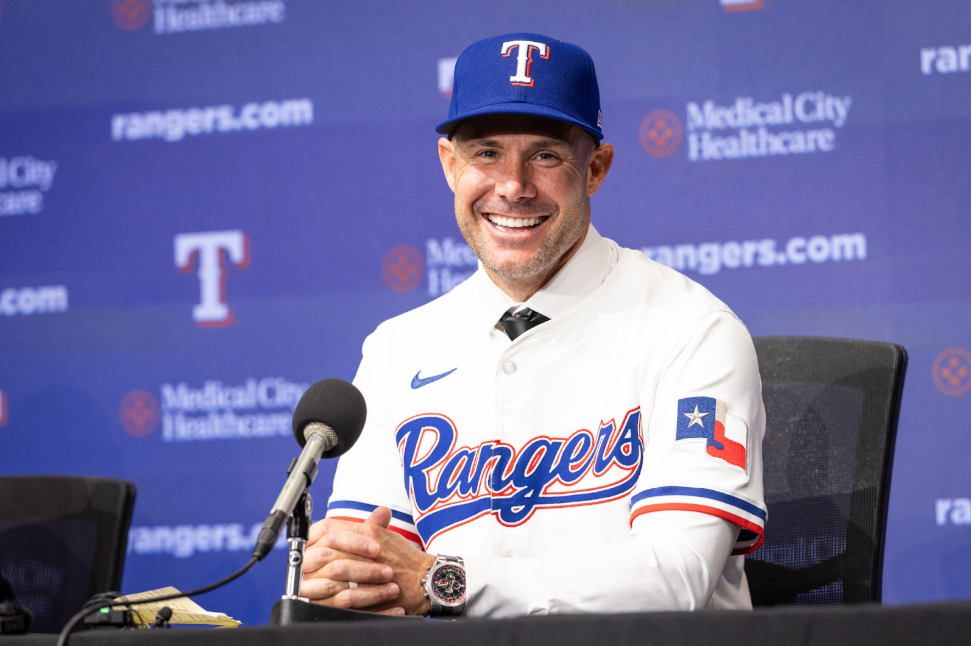
Skip Schumaker, New Manager of the Texas Rangers (Angela Piazza/Associated Press)
The Stunning Fall: From Champions to Chumps in 16 Months
The champagne had barely dried on the uniforms when the Texas Rangers' world came crashing down. Just sixteen months after hoisting the franchise's first World Series trophy in November 2023, the defending champions found themselves navigating one of the most precipitous falls from grace in recent baseball history. The 2024 season brought a 78-84 record and a third-place finish in the American League West, but at least that felt like a speed bump on championship hangover. The 2025 campaign's 81-81 mediocrity, however, revealed something more troubling: this wasn't a temporary setback but rather a fundamental roster crisis that would require surgical precision to repair.
For a national audience that watched Corey Seager and Marcus Semien power through an unforgettable October run in 2023, the subsequent collapse has been jarring. That championship team ranked among baseball's elite offenses, combining power, discipline, and timely hitting with a pitching staff anchored by Nathan Eovaldi and an emerging bullpen that dominated in high-leverage situations. Fast forward to 2025, and the Rangers ranked twenty-sixth in Major League Baseball in batting average at a paltry .234, with an on-base plus slugging percentage of .683 that barely resembled a competitive offense. While the pitching staff maintained respectability with a 3.47 ERA that led the majors, the bats went silent at the worst possible times, and the roster construction revealed glaring holes that two consecutive non-playoff seasons have only magnified.
Why the Rangers Cannot Spend Their Way Back
Enter the financial reality that will define the Rangers' 2026 season and potentially the next several years of this franchise. Ownership has drawn a hard line in the dirt regarding the Competitive Balance Tax threshold, and President of Baseball Operations Chris Young has been unequivocal in his messaging: the Rangers will not exceed the 2026 CBT limit of $244 million under any circumstances. This directive comes after the organization paid $10.8 million in luxury tax penalties in 2024 as a second-time payor, having also paid $1.8 million in 2023 as a first-time offender. The silver lining arrived when Texas stayed below the threshold in 2025, resetting their penalty status back to first-time payor rates of twenty percent should they cross over again. But ownership has made it clear that crossing over is not an option, leaving Young and General Manager Ross Fenstermaker with approximately $59.5 million in competitive balance tax space to work with after accounting for their current $184.5 million CBT payroll.
Young has publicly committed to fans that the Rangers can and will be competitive while respecting these financial constraints, pointing to recent examples of teams like the Tampa Bay Rays, Cleveland Guardians, and Milwaukee Brewers who have consistently punched above their payroll weight through shrewd player development, creative roster construction, and maximizing value in overlooked market segments. The question facing the organization is whether that philosophy can translate quickly enough to salvage what remains of this competitive window, particularly with Corey Seager entering his age thirty-two season and the roster's core aging rapidly.
Enter Skip Schumaker
The hiring of Skip Schumaker as manager to replace the retiring Bruce Bochy signals an organizational shift toward a development-focused, fundamentals-driven approach that prioritizes contact hitting and aggressive baserunning over the power-heavy philosophy that characterized recent seasons. Schumaker's track record, while brief, offers genuine optimism for what he might accomplish in Arlington. His 2023 Miami Marlins squad shocked the baseball world by winning eighty-four games and capturing a National League Wild Card berth despite a -57 run differential that suggested they had no business sniffing the playoffs. The secret to that improbable success was Schumaker's elite game management in close contests, as Miami went 33-14 in one-run games through aggressive bullpen usage, manufactured runs, and an uncanny ability to squeeze maximum production from limited offensive talent.
His relationship with first baseman Jake Burger proved particularly fruitful, as Burger launched a career-high thirty-four home runs while maintaining a .250 batting average under Schumaker's tutelage. The fact that Burger now finds himself wearing Rangers colors creates an intriguing reunion that could serve as a foundational piece of Texas's 2026 offensive resurgence. Burger's 2024 and 2025 seasons away from Schumaker saw his power output dip to twenty-nine home runs in each campaign while his on-base percentage stagnated in the low .300s, exactly where it sat before Schumaker's coaching intervention. Young and Fenstermaker are hoping that Schumaker can unlock the 2023 version of Burger again, the one who combined power with improved plate discipline and situational hitting to become one of the National League's most productive middle-of-the-order threats.
Finding the Way in the Bullpen
This bullpen-first approach makes strategic sense for a Rangers team that led baseball in starting pitching ERA but hemorrhaged close games through bullpen breakdowns. Schumaker's Marlins proved that elite relief pitching can transform a mediocre offense into a playoff team, and with Jacob deGrom (when healthy), Nathan Eovaldi, and emerging arms like Kumar Rocker and Jack Leiter providing rotation stability, the Rangers can realistically project themselves into more one-run games than they might win with their current offensive limitations. The philosophy is simple: keep games close, let Schumaker work his high-leverage magic with elite relievers, and manufacture enough runs through contact hitting and aggressive baserunning to steal victories other teams would concede.
The Second Base Crisis: Internal Solutions and Replacing Semien
Second base represents the most critical position to address after trading Marcus Semien to the New York Mets for Brandon Nimmo in a cost-cutting move that cleared payroll space but created a massive void up the middle. The Rangers find themselves with internal options in Josh Smith and Ezequiel Durán, both versatile players who have bounced around multiple positions in recent years without establishing themselves as everyday regulars. Smith possesses better defensive tools but has struggled to hit for average at the major league level, while Duran offers more offensive upside with a career .248 batting average but questions about his consistency and approach remain. The likely scenario involves a spring training competition between these two, with the winner claiming the starting job and the loser sliding into a utility role that capitalizes on their defensive versatility. Neither represents an ideal solution, but both come at the minimum salary cost that allows the Rangers to allocate their limited resources elsewhere. The front office still maintains the flexibility to pivot midseason through trades or by accelerating the development timeline for their top prospect.
Sebastian Walcott: The Teenage Phenom Who Could Save the Season
The true upside for second base arrives in the form of Sebastian Walcott, the nineteen-year-old shortstop who has rocketed to number four on MLB Pipeline's overall prospect rankings and number seven on Baseball America's list. Walcott spent all of 2025 at Double-A Frisco as one of just three teenagers in the Texas League, slashing .255 with a .355 on-base percentage and .386 slugging percentage while launching thirteen home runs and stealing thirty-two bases. His scouting grades scream future superstar: sixty-five-grade power that has produced exit velocities up to 106 mph, a seventy-grade arm that could play anywhere on the diamond, and fifty-five-grade speed that makes him a legitimate base-stealing threat. The contact issues that currently limit his hit tool to a fifty grade represent exactly the kind of development project that Schumaker specialized in with Miami, as he helped Jazz Chisholm Jr. evolve from a strikeout-prone toolsy player into a 2023 All-Star who hit twenty-five home runs and stole thirty-two bases.
The Rangers' plan for Walcott reflects both patience and pragmatism. He will begin 2026 at Triple-A Round Rock after receiving a non-roster invitation to spring training where Schumaker can personally work with him on pitch recognition and two-strike approaches. If the internal second base competition produces unsatisfactory results through the first three months or if Texas finds itself in playoff contention at the trade deadline, Walcott's promotion becomes the obvious move that simultaneously addresses a roster need and accelerates the development of the franchise's most important prospect since Jurickson Profar held the number one overall prospect ranking more than a decade ago. The beauty of this strategy is its flexibility: if Smith or Duran thrives under Schumaker's coaching, the Rangers can keep Walcott in the minors for a full season of development while maintaining other young talent as depth options.
Cody Freeman: The Spark Plug Who Embodies Schumaker's Philosophy
Freeman himself represents the kind of scrappy, fundamentally sound player that Schumaker built his Miami roster around. The twenty-four-year-old tore through Triple-A Round Rock in 2025, batting .336 with a .931 OPS, nineteen home runs, and twenty-five doubles before earning a July promotion to the majors where he appeared in thirty-six games. His elite contact skills (just 15.7 percent strikeout rate in his minor league career) and defensive versatility (he has played every position except catcher and center field) make him the perfect complement to whoever wins the second base job, allowing the Rangers to platoon based on matchups while keeping Freeman's bat in the lineup through utility starts at third base, the outfield corners, and designated hitter. Bruce Bochy called Freeman "a catalyst" and "a spark for the club," exactly the kind of high-energy, team-first player that championship teams are built around. Freeman's ability to provide quality at-bats and energy regardless of position makes him invaluable to a roster that needs every advantage it can manufacture.
Abimelec Ortiz: The Wild Card Power Threat
The competitive landscape of the American League West provides both challenges and opportunities for this retooled Rangers squad. The Seattle Mariners enter 2026 as favorites after addressing their offensive deficiencies, while the Houston Astros remain dangerous despite their aging core. But baseball history is littered with division races that turned on small margins, and the Rangers have every reason to believe they can compete for one of three American League Wild Card spots even if winning the division proves beyond reach. Abimelec Ortiz, the organization's number eighteen prospect, provides the kind of wild-card element that could elevate this team from Wild Card fringe to legitimate contender. The twenty-three-year-old left-handed power hitter demolished Triple-A pitching in the second half of 2025, slashing .283 with a .388 on-base percentage and .565 slugging percentage while launching nine home runs across forty-one games.
His 2023 minor league season, which saw him belt thirty-three home runs with a .619 slugging percentage en route to Minor League Player of the Year honors, demonstrated legitimate plus-plus raw power that could translate to twenty-five to thirty home run potential at the major league level. The challenge with Ortiz has always been contact consistency, as his below-average hit tool has scouts projecting him as a platoon bat rather than an everyday player. But the Rangers have the perfect mentor already on the roster in Jake Burger, who experienced his own career-best thirty-four home run season under Schumaker in Miami by learning when to sell out for power and when to simplify his approach with two strikes. If Ortiz can absorb even a fraction of what Schumaker taught Burger, suddenly the Rangers have another dangerous middle-of-the-order weapon available when rosters expand or injuries create opportunities.
Can This Actually Work? The 82-to-86 Win Projection
The projection models and analytical frameworks suggest the Rangers should win somewhere between eighty-two and eighty-six games with this roster construction, putting them on the Wild Card bubble without guaranteeing a playoff berth. That range accounts for normal variance in player performance, assumes health from key veterans like deGrom and Eovaldi (admittedly a significant assumption given their injury histories), and projects modest improvement from young players like Wyatt Langford and Evan Carter who are entering their age twenty-four seasons with room for offensive growth. The ceiling scenario in which everything breaks right could push Texas toward eighty-eight or eighty-nine wins if Schumaker's high-leverage bullpen management replicates his 2023 success, if Burger rediscovers his Miami form, and if one of the young prospects (Walcott, Ortiz, or Freeman) exceeds expectations. The floor scenario with injuries to key veterans and continued offensive struggles could leave the Rangers treading water around .500 again, making 2026 feel like a lost transition year rather than a competitive resurrection.
If that version of Burger shows up in Arlington, suddenly a lineup featuring Brandon Nimmo's elite on-base skills, Corey Seager's superstar production, Wyatt Langford's emerging power and speed combination, and Burger's thirty-plus home run potential looks far more formidable than the collection of replacement-level hitters that dragged down the 2025 offense. The expanded playoff format means that even eighty-five wins might be enough to secure a Wild Card berth, particularly if the American League playoff race remains competitive across multiple divisions.
The Fan Frustration: Selling a Budget Approach After a Championship
Chris Young's challenge is convincing a fanbase still processing the whiplash of championship euphoria followed by consecutive losing seasons that this budget-conscious approach can deliver playoff baseball. The optics of trading Marcus Semien for salary relief while non-tendering fan favorites like Adolis García (whose .647 OPS over the past two seasons made the decision rational if unpopular) and Jonah Heim have created understandable skepticism about ownership's commitment to winning. But Young's counterargument rests on the sustainability of the model: by refusing to exceed the luxury tax threshold, the Rangers preserve long-term financial flexibility that allows them to strike when premium talent becomes available, whether through free agency or trade. The Tampa Bay Rays have operated under similar constraints for two decades while maintaining one of baseball's best winning percentages, and while critics rightfully note the Rays' lack of World Series titles, they also acknowledge that Tampa Bay's consistent competitiveness derives directly from their disciplined financial management and elite player development.
Player Development: The Long-Term Foundation
The player development aspect becomes crucial when evaluating this strategy's long-term viability. The Rangers' farm system, ranked around the middle of baseball after graduating Wyatt Langford and Evan Carter in recent years, needs to produce impact talent at a higher rate to offset the roster limitations imposed by payroll constraints. Sebastian Walcott represents the franchise cornerstone prospect whose development could determine whether Texas remains competitive through the late 2020s, but he cannot be the only answer. The organization needs Kumar Rocker and Jack Leiter to fulfill their front-of-the-rotation potential, Abimelec Ortiz to become more than a platoon bat, and the next wave of prospects currently at Low-A and High-A to develop faster than normal timelines would suggest. This creates enormous pressure on the player-development staff and on Schumaker to maximize every ounce of ability from the young talent on the major league roster.
The free agent market could still present opportunities for the Rangers to add veteran depth or fill specific needs, particularly as the non-tender class and minor league free agents sort themselves out. Teams like Cleveland and Tampa Bay routinely turn non-roster invitees into valuable contributors through superior coaching and player development infrastructure, and the Rangers will need to follow that blueprint if they hope to compete without spending heavily in free agency.
The Schumaker Culture Shift: Can It Take Root Quickly?
Skip Schumaker's first spring training with the Rangers will reveal much about whether this culture shift from the Bruce Bochy era to a new development-focused philosophy can take root quickly enough to matter in 2026. Bochy's steady hand and championship pedigree provided credibility and calm during the turbulent 2025 season, but his traditional approach to lineup construction and bullpen management may not have been optimal for extracting maximum value from a limited roster. Schumaker brings a more modern, analytically informed perspective while maintaining the "Cardinal Way" emphasis on fundamentals, preparation, and professionalism that defined his playing career in St. Louis. The question is whether twenty-four and twenty-five year old major leaguers will respond to his coaching the same way that the young Marlins did, or whether the veterans on this roster (Seager, Eovaldi, deGrom) will embrace a manager with just two years of big league managing experience and a losing overall record.
Why This Story Matters to Baseball Beyond Texas
The national audience watching from afar should understand that the Rangers' situation is far from hopeless despite the consecutive seasons outside the playoffs. This organization still employs one of baseball's premier front office executives in Chris Young, whose aggressive trades and free agent signings built the 2023 championship roster. They have a manager in Skip Schumaker whose creativity and game management skills extracted playoff performance from a Marlins roster that had no business competing. The core pieces remain in place, with Corey Seager providing perennial MVP-caliber production, a starting rotation that led baseball in ERA, and young position players like Wyatt Langford and Evan Carter who are just beginning to scratch their offensive potential. What's missing is the depth, the bullpen reliability, and the contact-hitting throughout the lineup that allowed the 2023 team to manufacture runs in multiple ways.
The path forward requires discipline, patience, and a degree of luck that no front office can manufacture. Chris Young and Ross Fenstermaker must nail their free agent signings, squeeze value from the non-tender market, and trust that Skip Schumaker can work the same developmental magic with Jake Burger and the Rangers' young prospects that he demonstrated in Miami. If Sebastian Walcott forces an early promotion with dominant Triple-A performance, if Cody Freeman's energy and contact skills translate into sustained production, and if the rotation stays healthy, then eighty-five to eighty-seven wins becomes achievable. That might not sound inspiring to fans who watched their team win eleven straight postseason games en route to a World Series title just twenty-six months earlier, but in the current competitive landscape of baseball, it would represent a remarkable achievement for a team operating under such severe financial constraints.
The Final Verdict: Wild Card Contenders or Pretenders?
The ultimate verdict on whether the Rangers can be genuinely competitive in 2026 depends on how we define competitive. If competitive means winning ninety-plus games and threatening for the division title, the answer is probably no unless everything breaks perfectly and the Mariners and Astros both underperform. If competitive means fighting for a Wild Card spot into late September with a legitimate chance to reach October, then yes, the Rangers absolutely have the talent and the leadership to achieve that goal. The bullpen upgrades alone should prevent the kind of late-game collapses that plagued 2024 and 2025, while Schumaker's track record in one-run games suggests Texas could flip their record in close contests from below .500 to well above it. In baseball, that swing alone can account for ten to twelve wins over the course of a full season, which would have put the 2025 Rangers solidly in playoff position.
Chris Young's commitment to fans that the Rangers will remain competitive while respecting payroll constraints is not empty rhetoric but rather a testable hypothesis that we will evaluate over the coming season. The proof will arrive in how quickly the bullpen stabilizes under Schumaker's management, whether Danny Jansen provides the offensive spark at catcher that has been missing, if Josh Smith or Ezequiel Duran can establish themselves as credible everyday options at second base, and ultimately whether Sebastian Walcott develops fast enough to contribute meaningfully in 2026 or if his impact waits until 2027 and beyond. The Rangers are not rebuilding in the traditional sense because they still employ too much elite talent on long-term contracts to tear everything down. But they are resetting, retooling, and attempting to prove that financial discipline need not preclude competitive baseball.
A Test Case for Baseball's Future
The baseball world will be watching Texas closely in 2026, not because the Rangers are expected to challenge for a championship but because they represent a test case for whether intelligent roster construction and elite coaching can overcome payroll limitations in an era of escalating player salaries and luxury tax thresholds. If Chris Young and Skip Schumaker succeed in returning Texas to the playoffs while staying comfortably under the CBT limit, they will have created a blueprint that other mid-market organizations can follow. If they fall short, it will reinforce the increasingly common belief that sustained championship contention requires either enormous payrolls or generational player development pipelines that take years to construct. The Rangers are betting they can thread that needle, finding just enough immediate impact from veteran additions and young players to keep this competitive window open while the next wave of prospects develops. It is a high-wire act that will define not just the 2026 season but potentially the next decade of Rangers baseball.
About the Author
The Baseball Nerd launched in early 2025 with a simple philosophy: stories based on numbers, not feelings. Combining proprietary metrics like the SPARK Score (for identifying breakout candidates) and the FADE Score (for predicting regression) with accessible storytelling, he serves both serious sabermetrics enthusiasts and casual fans looking to understand the game at a deeper level. His Sunday Stories explore baseball history through approachable narratives, exploring the personal side of baseball with historical and lost stories; while his in-season coverage focuses on the Texas Rangers. You can find his work at The Baseball Nerd, where analytics meet narrative in a way that makes the numbers come alive.