
THE NEXT WAVE: FIVE PITCHERS WHO WENT FROM MINORS TO MUST-WATCH
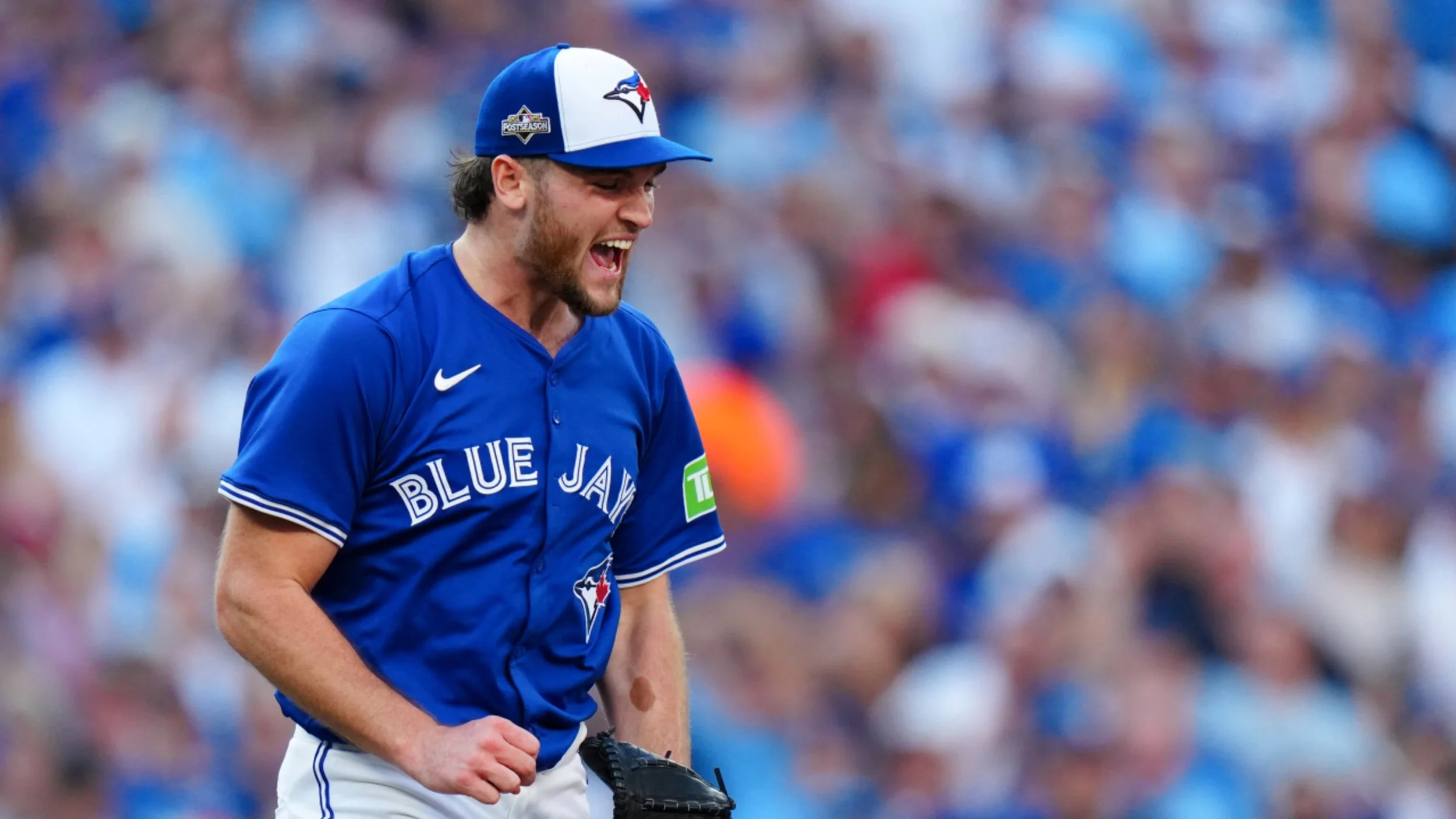
Trey Yesavage of the Toronto Blue Jays (MLB.com)
The SPARK Score© (Statistical Performance Acceleration & Rising Kinetics) is a comprehensive Baseball Nerd evaluation framework designed to identify pitchers aged 20-26 who are poised for breakout performance. It's not a projection system that spits out future ERAs, and it's not a simple ranking of current stats. Instead, it processes underlying metrics across four core pillars to separate legitimate talent from statistical noise. Those pillars are: Stuff Quality (velocity, movement, arsenal depth), Contact Management (barrel rates, hard-hit percentages, expected stats versus actual results), Swing-and-Miss Generation (strikeout rates, whiff percentages, chase rates), and Command Evolution (walk rates, zone control, year-over-year improvement). Each category is weighted based on predictive value, with scores ranging from 0-100. Elite SPARK (75+) signals imminent dominance or sustained ace-level performance. High SPARK (60-74) indicates strong breakout candidates with frontline starter upside. Moderate SPARK (45-59) suggests intriguing arms with questions remaining. These scores aren't about what these pitchers did last season; they're about what the underlying metrics say they're built to do next.
THE SPARK SCORES (2026 Projections):
Jacob Misiorowski (Brewers, Age 23) - 65/100 (High SPARK)
Nolan McLean (Mets, Age 23) - 64/100 (High SPARK)
Hurston Waldrep (Braves, Age 23) - 62/100 (High SPARK)
Trey Yesavage (Blue Jays, Age 22) - 61/100 (High SPARK)
Joey Cantillo (Guardians, Age 25) - 61/100 (High SPARK)
JACOB MISIOROWSKI: The 99 MPH Question Mark With Strikeout Stuff - 65 SPARK
Jacob Misiorowski throws harder than almost anyone in baseball, and he's still figuring out what that means. His fastball averaged 99.3 mph in 2025; not his max velocity, but his average with 15.9 inches of induced vertical break that makes hitters swing under it constantly. The result? A 32% strikeout rate that put him in the elite tier alongside guys making ten times his salary. But here's the catch, and there's always a catch with young flamethrowers: he walked 11% of the batters he faced.
That walk rate is the entire story with Misiorowski. You can't sustain a sub 4.00 ERA when you're handing out free passes to more than one in ten hitters, and his 4.38 ERA across 63.7 MLB innings reflected that reality. Except when you look deeper, the picture gets more interesting. His xwOBA (.288) was actually better than his wOBA (.298), meaning he was getting slightly unlucky with sequencing. His barrel rate of 7.9% is right at the threshold of acceptable, and his 37.5% hard-hit rate is solid for a power arm.
What separates Misiorowski from other hard-throwing prospects who flame out is the secondary arsenal. His slider sits 94 mph; that's faster than most pitchers' fastballs with 24 inches of drop that generates empty swings. The changeup at 92.3 mph gives him a third weapon that keeps hitters honest. This is a pitcher with three above-average pitches anchored by triple-digit heat, and he's 23 years old working through his first extended MLB stint.
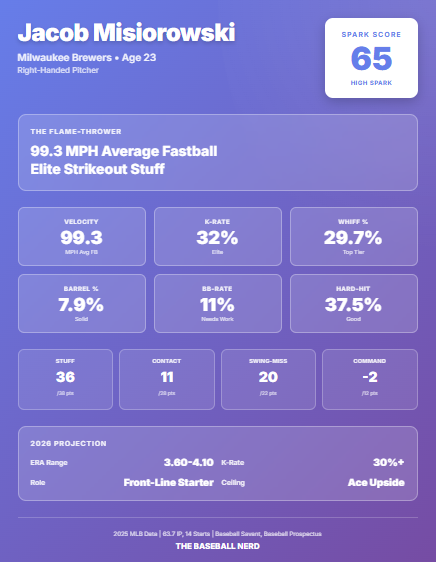
Jacob Misiorowski SPARK Graphic
The 65 SPARK Score captures the ceiling-floor dynamic perfectly. If Misiorowski can trim even two percentage points off that walk rate, bringing it down to 9%, you're looking at a frontline starter with ace upside. The strikeouts are real, the velocity isn't going anywhere, and the stuff grades as plus across the board. But if the walks persist and climb into double digits regularly, he's a high-leverage reliever who terrorizes hitters for 60-70 innings instead of a starter who logs 180.
His 2026 projection splits the difference: 3.60-4.10 ERA with a 30%+ strikeout rate and persistent walk issues. The bet here is on maturation and mechanical refinement, but it's a bet worth making. When you throw 99 with a breaking ball that drops two feet, the margin for error is wider than it looks. Misiorowski doesn't need to be perfect; he just needs to throw more strikes.
NOLAN MCLEAN: The Groundball Artist With Elite Contact Management – 64 SPARK
Nolan McLean doesn't look like a breakout pitcher on the surface. In just 48 innings across 8 starts with the Mets, he posted a 2.06 ERA that screams "small sample luck," and normally you'd be right to be skeptical. Except the underlying metrics aren't just good. They're exceptional in ways that suggest this is real.
Start with the ground ball rate: 60.2%. That's not just elite, that's "best in baseball" territory. When six out of every ten balls put in play are driven into the dirt, you're neutralizing the modern game's emphasis on launch angle and exit velocity. McLean's sinker sits 94.4 mph with heavy sink and arm-side run that pounds the bottom of the zone relentlessly. Hitters know it's coming, and they still can't lift it. Seems to be pretty good stuff.
It is also not just about keeping the ball on the ground. McLean's contact quality metrics are absurd for a 23-year-old making his debut. An 8% barrel rate is excellent. A 43.4% hard-hit rate is right around league average, which is impressive when you're facing big league lineups for the first time. His xwOBA (.293) is slightly worse than his wOBA (.259), meaning he got a bit lucky, but we're talking about a 34-point gap over 48 innings, with the Mets’ fairly leaky defense in 2025. That regresses to maybe a 2.80-3.20 ERA instead of 2.06, and that's still exceptional.
But wait..there’s more! His arsenal is deeper than you'd expect from a sinker-baller. His curveball drops 58 inches and gives hitters a completely different look after a steady diet of 94 mph sinkers. The changeup at 86.8 mph keeps them honest on the outer half. The slider adds another weapon that breaks late and generates chases. This isn't a one-trick pitcher gaming hitters with deception; he has a four-pitch mix that attacks from different angles.
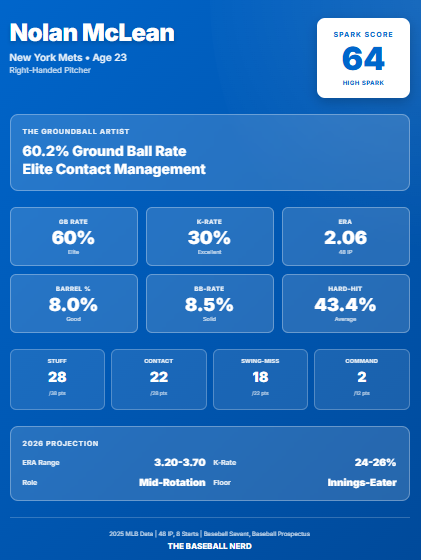
Nolan McLean SPARK Graphic
The 64 SPARK Score reflects high confidence in his ability to sustain performance with realistic regression baked in. His 8.5% walk rate needs improvement, and the 30.3% strikeout rate will likely settle closer to 24-26% over a full season. But the ground ball rate is sticky, the contact quality management is real, and the stuff plays at the MLB level. His 2026 projection: 3.20-3.70 ERA with elite groundball numbers and innings-eating reliability.
McLean is the anti-flamethrower, the guy who wins with precision instead of power, almost Greg Maddux-ish. In an era where everyone's chasing 100 mph, there's something beautiful about a 23-year-old inducing weak contact and racking up groundouts like it's 1987.
HURSTON WALDREP: The Sinker-Heavy Groundball Machine - 62 SPARK
Hurston Waldrep's 2025 season was a tale of two levels, and both stories matter. In Triple-A Gwinnett, he struggled to a 4.42 ERA across 91.7 innings with a concerning 12.3% walk rate that raised questions about his readiness. Then the Braves called him up, and over 50.7 MLB innings, he posted a 3.02 ERA with a 9.7% walk rate and started looking like the pitcher Atlanta thought they were developing.
The stuff is built around a sinker that sits 94.5 mph with heavy arm-side movement that generates grounders at an elite rate. His 50.4% ground ball rate in MLB isn't quite as extreme as McLean's, but it's well above average and paired with something even more impressive: a 4% barrel rate. That's top-three percentile in baseball. Waldrep is getting weak contact on a level that most veteran aces would envy, and he did it as a 23-year-old in his first cup of coffee.
What makes Waldrep's profile interesting is how he's constructed his arsenal to maximize that sinker. The slider at 87.2 mph has 37 inches of drop and works as his primary strikeout pitch. The changeup tunnels beautifully off the sinker and keeps hitters from sitting dead-red on the fastball. The curveball adds a fourth look that he doesn't use much but keeps in his back pocket for show-me situations. Everything is designed to either generate grounders or set up the sinker, and it works.
The concerning part is the stuff didn't translate as cleanly in Triple-A, where his walk rate ballooned and hitters made better contact. But there's a developmental pattern here; young pitchers figuring out the strike zone at higher levels before it clicks in MLB. Waldrep's MLB walk rate of 9.7% isn't great, but it's workable, and the elite barrel suppression gives him margin for error. When you're allowing the fourth-lowest barrel rate in baseball, you can survive putting a few extra guys on base, especially with the Braves’ defense behind him.
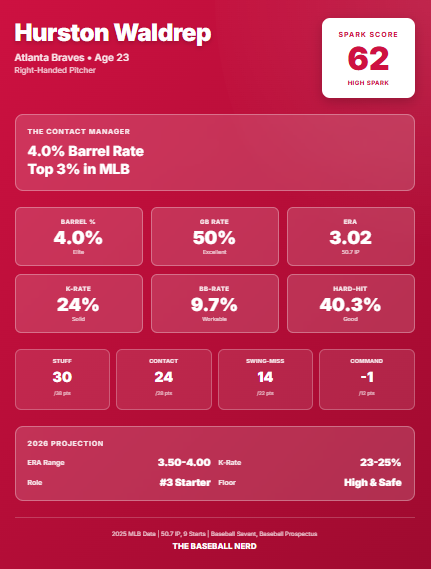
Hurston Waldrep SPARK Graphic
The 62 SPARK Score reflects confidence in his contact management skills with questions about the walks and whether the strikeout rate (24.6% K%) can improve enough to offset them. His 2026 projection: 3.50-4.00 ERA with elite groundball numbers and innings-eating reliability. Waldrep might never be an ace, but there's a very high floor here as a number-three starter who gives you 170 innings and keeps the ball in the park.
TREY YESAVAGE: The October Legend With Postseason Pedigree - 61 SPARK
Trey Yesavage's story doesn't make sense until you remember that October baseball is when legends are made. In 98 minor league innings across four levels in 2025, he posted a 3.12 ERA with elite strikeout numbers. Then he got three MLB starts in September and was fine. It was nothing special, just a 3.21 ERA that suggested he could handle the level. When the playoffs started, Yesavage became the story of the postseason.
Five postseason starts. Eleven strikeouts in Game 2 of the ALDS without allowing a hit through 5 and third innings. Twelve strikeouts in World Series Game 5, setting a rookie record. More World Series strikeouts (17) than regular season strikeouts (16). By the time the confetti fell, Yesavage had done something no pitcher in MLB history had accomplished; recording his first two career 10-strikeout games in the postseason.
The stuff that makes it possible is elite. His fastball sits 94.7 mph with 19.5 inches of induced vertical break, creating exceptional carry that plays at the top of the zone. But the real weapon is the slider at 88.7 mph with the most arm-side movement of any pitcher in baseball. It's 3.4 inches that makes it look like a fastball before it darts away from barrels. Add a splitter that drops 31 inches and a curveball with elite depth, and you have a four-pitch mix that generates a 16.7% swinging-strike rate.
The problems? They're real. A 61.5% hard-hit rate in his limited MLB sample is catastrophic. An 11.3% walk rate is way too high. But here's the thing about Yesavage; those numbers came from 14 regular season innings. The postseason showed what he's capable of when the adrenaline is flowing and the stakes are highest. That's not nothing. Some pitchers are wired differently for October baseball, and Yesavage proved he's one of them.
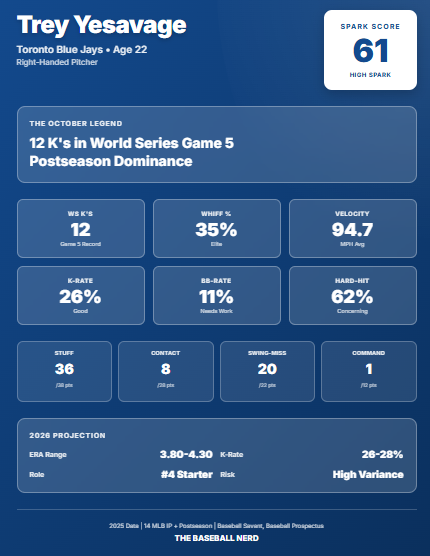
Trey Yesavage SPARK Graphic
The 61 SPARK Score reflects massive upside with significant risk. If he can cut the walks to 9% and improve his contact quality management, you're looking at a legitimate number-two starter with frontline upside. If the regular season version is the real Yesavage, he's a back-end arm who elevates in big moments. His 2026 projection: 3.80-4.30 ERA with the caveat that his ceiling is significantly higher if the postseason dominance translates.
The Blue Jays are betting on the talent, and given what he did in the World Series, it's hard to blame them. When you strike out 12 in the Fall Classic as a 22-year-old, you've earned the benefit of the doubt.
JOEY CANTILLO: The Soft-Tossing Lefty With the Hammer Curve – 61 SPARK
Joey Cantillo doesn't fit the modern pitching archetype. His fastball sits 91.7 mph, which in 2025 is barely above average for a reliever and borderline soft for a starter. He doesn't light up the radar gun, doesn't generate empty swings on his heater, and would get eaten alive if that fastball was all he had. But Cantillo isn't trying to beat you with velocity. He's trying to make you look silly on an 81-mph curveball that drops 64.6 inches, and over 67 innings with Cleveland, he did exactly that.
The curveball is the whole operation. With 64.6 inches of vertical break, it's one of the five best curveballs in baseball by pure movement. It starts at the letters and ends up buried in the dirt, and hitters swing over it constantly despite knowing it's coming. That pitch alone generated a 26.9% strikeout rate and kept his wOBA against at .289 despite throwing 92 on his best day. When your breaking ball is that good, you don't need to light up the gun.
What's improved for Cantillo is the command. His walk rate jumped from 9.2% in a brief 2024 call-up to 10.5% in 2025, which is movement in the wrong direction, but the underlying process looks better. His zone rate improved, his first-pitch strike percentage climbed, and he's learning to trust his stuff instead of nibbling. The 7.2% barrel rate suggests he's managing contact well, and his 41.8% hard-hit rate is right around league average.
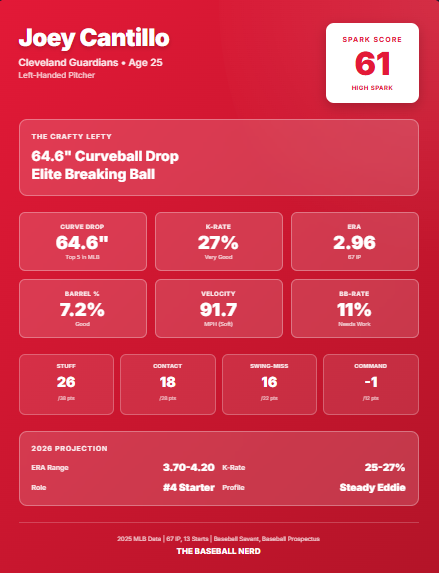
Joey Cantillo SPARK Graphic
The ceiling here is limited by the velocity. You simply can't be an ace throwing 92 mph in 2025 unless you're named Maddux or Glavine, and Cantillo isn't reinventing the wheel. But the floor is rock-solid. He's a lefty with elite breaking stuff and enough command to get through lineups twice. That's a number-four starter who eats 150-160 innings and keeps you in games, which has value even if it's not sexy.
The 61 SPARK Score reflects a pitcher who's maximized his talent but faces hard physical limitations. His 2026 projection: 3.70-4.20 ERA with elite curveball metrics and mid-rotation reliability. Cantillo won't make highlight reels with his fastball, but when hitters are waving at curveballs in the dirt, nobody cares about the velo reading. The Guardians have found exactly what they needed in a durable lefty who gives them quality innings without breaking their development budget.
THE BOTTOM LINE
These five pitchers represent the modern developmental pipeline working exactly as teams hope it will. They spent 2024 refining their craft in the minors, got the call to the Show in 2025, and announced themselves as legitimate MLB starters with staying power. But they're far from finished products, and that's what makes them fascinating.
Misiorowski has the highest ceiling - if he finds the strike zone consistently, you're looking at a perennial All-Star with Cy Young upside. McLean and Waldrep offer the safest floors as groundball machines who can anchor a rotation for a decade. Yesavage has the most questions but showed in October that when it matters most, he can be untouchable. And Cantillo proves there's still room in baseball for crafty lefties who win with guile instead of gas.
The SPARK Score system identified these five before they became household names, and the projections suggest they're built to sustain and improve. For 2026, bet on Misiorowski and McLean as your highest-upside plays. Waldrep is the safest bet to give you 170 solid innings. Yesavage is the wildcard who could be special or frustrating depending on which version shows up. And Cantillo is your steady Eddie who won't blow you away but won't blow up either.
The numbers told us these pitchers were ready before they proved it. What they do in 2026 will tell us if they're here to stay.
DATA SOURCES & METHODOLOGY
This analysis is built on comprehensive data from multiple industry-leading baseball analytics platforms, ensuring accuracy and depth across traditional and advanced metrics.
Primary Data Sources:
Baseball Savant (Statcast)
Baseball Prospectus
Baseball Reference
Additional Context:
All expected statistics (xwOBA, xERA, xFIP) are calculated using Statcast's expected metrics model, which accounts for exit velocity, launch angle, and sprint speed to determine what outcomes should have occurred based on quality of contact.
Pitch movement data is measured in inches of deviation from a theoretical spinless pitch, with induced vertical break (IVB) measuring rise/drop and horizontal movement measuring arm-side/glove-side break.
Ground ball rates, barrel rates, and hard-hit percentages are calculated using MLB's official Statcast thresholds: barrels require exit velocity of 98+ mph and launch angles between 26-30 degrees; hard-hit balls have exit velocity of 95+ mph.
Acknowledgments:
Special thanks to the baseball analytics community for developing and maintaining these incredible data resources that make this level of analysis possible.
This methodology is open-source for personal and non-commercial use. Commercial applications require attribution and notification to the author. Disclaimer: SPARK Score is a statistical model and should be used as one tool among many in player evaluation. Past performance does not guarantee future results. The author is not responsible for decisions made based on SPARK Score analysis.