
A Deep Dive into Scott Harris as Detroit Tigers President
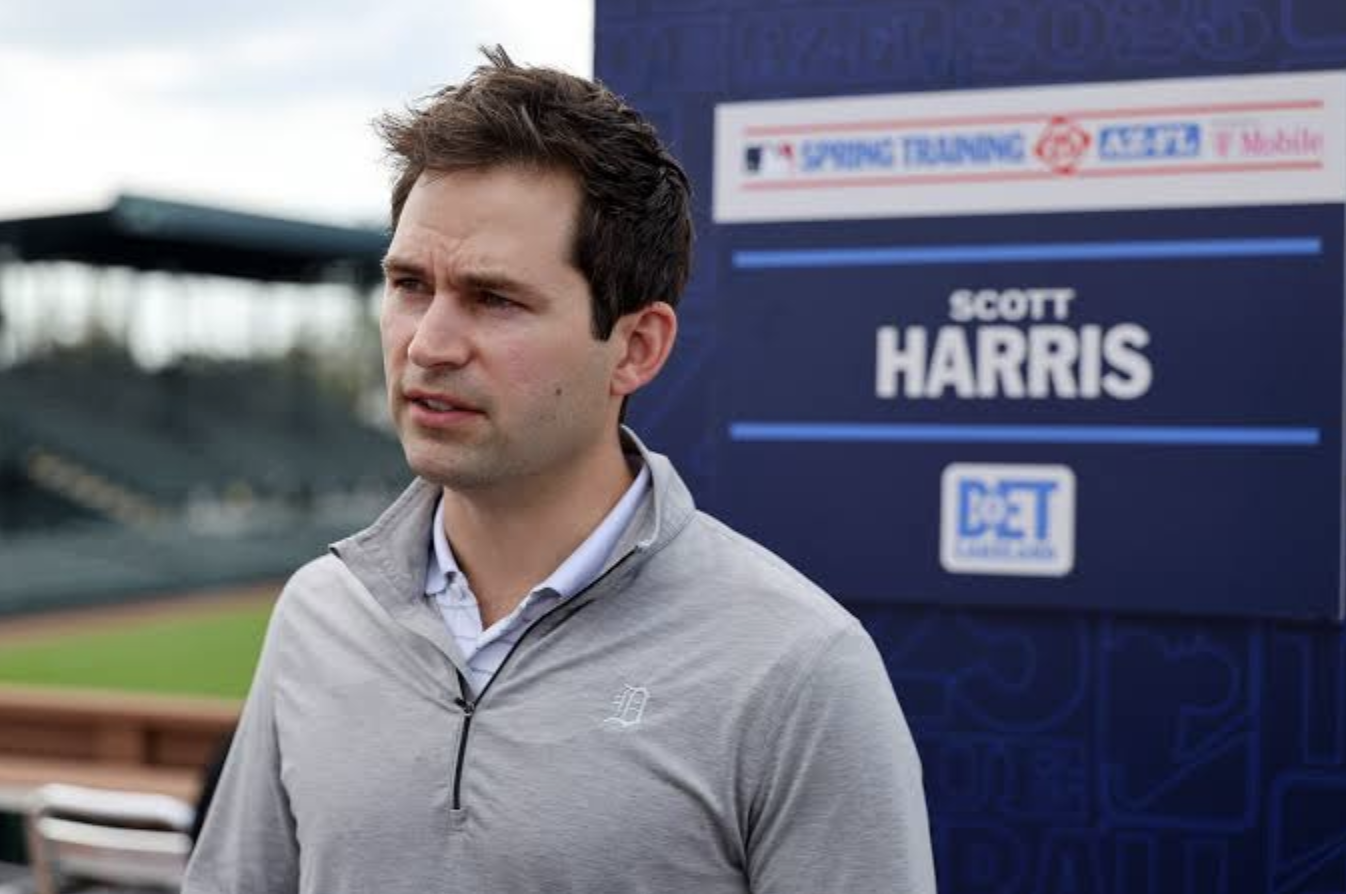
Scott Harris of the Detroit Tigers (Photo by Mike Carlson/MLB Photos via Getty Images)
Detroit hired Scott Harris on September 19, 2022 to replace former GM Al Avila. Avila’s rebuild was considered a failure, yet with a silver lining. Avila made some good draft picks (Tarik Skubal, Casey Mize, Riley Greene, Dillon Dingler, Reese Olson) and some failed acquisitions (Javier Báez, Jordan Zimmermann, Austin Meadows). Avila’s departure from the organization was a welcome signal to the fanbase.
Prior to his arrival in Detroit, Harris was an assistant GM with the Cubs under Theo Epstein and Jed Hoyer, then worked directly under President of Baseball Operations (POBO) Farhan Zaidi with the Giants. Epstein and Zaidi are respected roster builders, so the Harris hire seemed like a hire with a lot of potential.
The Detroit Tigers have a record of 38-49 this season, which is 3rd worst in the AL (6th worst in the Majors). This is after an 8-7 mark during the last two weeks. Many pundits predicted the Tigers would make a deep playoff run this year after two consecutive years of squeaking into the AL playoffs. Yet, over their last 162 games (dating back to last season), they are 69-93. A record that would, on a year-to-year basis, mean they are one of the worst ~5 teams in the sport.
This makes feelings a bit complicated regarding Harris and his tenure.
How does a team that has made the playoffs the past two years have a record amongst the worst in baseball? Well, we know it doesn’t have to do with Tarik Skubal. In games he’s started since the beginning of 2024, the Tigers are 46-27. Yet, since the start of 2025, the Tigers are 125-124. Remove starts from Skubal and the team slides to 85-102. But, with a team that has playoff aspirations, POBO Scott Harris has failed to upgrade the major ballclub in order to maximize the prime of Skubal with the growth of future perennial All-Stars OF Riley Greene and catcher Dillon Dingler.
Here’s the Tigers starting lineup and rotation options, with a * denoting if Harris made the acquisition
Lineup
Starting Pitcher Options:
So, what constitutes a good GM? The simple answer is the easy one: one that acquires more good players than bad players. As they say in the card game Euchre, you have to call hands in order to win (in other words, a team wins by playing proactively and often, aggressively). Who are some of the most revered GMs in recent history? Current Phillies POBO Dave Dombrowski has built rosters that went to a World Series with four different franchises. Former Red Sox and Cubs GM, Theo Epstein, was part of three World Series winning teams. Current Dodgers POBO, Andrew Friedman, is highly respected for roster construction for the small market Rays as well as the mega-mega budget Dodgers.
Year to year, there are philosophies that winning teams maintain in July as the trade deadline draws closer. One aspect of team construction is that World Series contending teams almost always aim to beef up or tinker their bullpen. Bullpens have become increasingly important to postseason success over the past ten years. Many baseball fans will remember the 2015 Kansas City Royals bullpen whose top four relievers did NOT allow an earned run during the World Series. In 17 WS innings, Kelvin Herrera, Luke Hochevar, Wade Davis, and Ryan Madson allowed one unearned run and struck out 21 batters against 15 total base runners. The 2016 Cleveland Indians had a lights out bullpen consisting of Cody Allen, Andrew Miller, and Bryan Shaw that led them to game 7 of the World Series. Conversely, Tigers fans will remember the Miguel Cabrera prime years (2008-2016) being undone by multiple postseason bullpen meltdowns (notably 2013 vs Boston). That year, Detroit had a 4.50 regular season bullpen ERA. Bullpens can easily be the difference between a deep playoff run or a quick exit.
WS contending teams try to patch every hole they can within their means before the trade deadline expires. Example: the 2025 Mariners. GM Jerry Dipoto saw a need to add some heavy hitters to his lineup, so he acquired stud 3B Eugenio Suárez and 1B Josh Naylor to plug two major holes the roster had. Both players played pivotal roles and had key hits en route to an ALCS loss to the Blue Jays. Both were pending free agents when acquired and neither cost a top 6 prospect to acquire. Naylor would go on to re-sign with the Mariners in the off-season. The point being made is, it doesn’t always cost huge prospect capital to acquire good players, particularly on expiring deals.
The Tigers entered the 2025 trade deadline in first place. They had significant holes, including the bullpen and 3B. The team would go onto a magnificent, historic slide, ultimately culminating with the team barely squeaking into the playoffs. They blew a double-digit lead in a division game in September and had one of the worst offenses in the sport. Harris’ failure to upgrade the lineup cost the Tigers a chance at a deep playoff run in a year where there was not an obvious favorite in the AL.
When a team has a multi-Cy Young winner on the hill starting 2-3 games in a series, that’s a massive advantage. It was a wasted opportunity.
Trades
Harris made his first trade in the winter after the 2022 season when he traded RP Gregory Soto and UT Kody Clemens to the Phillies for OF turned 3B turned OF Matt Vierling, INF Nick Maton, and catcher Donny Sands. This is the only trade that Harris has performed that resulted with net positive WAR major league players.
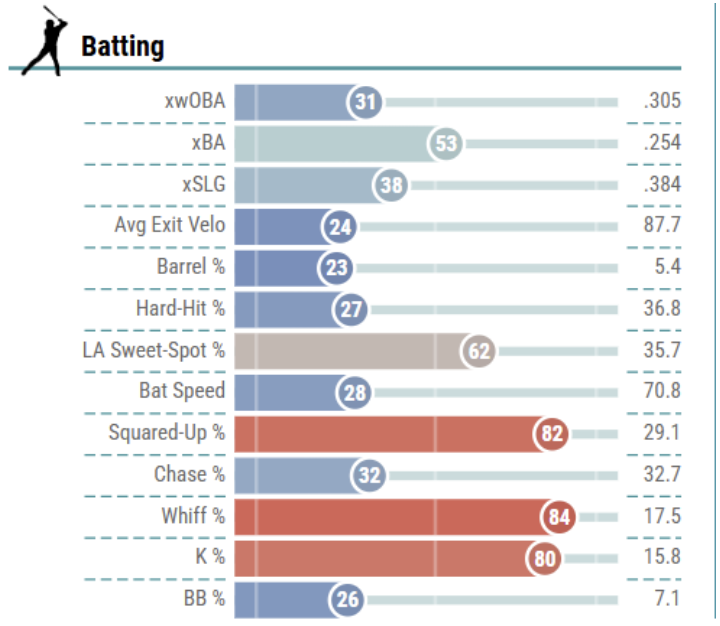
Matt Vierling 2026 Hitting Metrics (Baseball Savant)
The asterisk to the last fact is the acquisition of UT Zach McKinstry in March 2023 for cash considerations. McKinstry has proved to be a solid and flexible player who is best used in a “6th man” type of role off the bench. But, can it truly be considered a trade if there was only one player involved in the deal?
Trade Deadline Deals
The 2023 trade deadline saw the Tigers as sellers. SP Eduardo Rodríguez was in a walk year where he’d finish the year with a 3.30 ERA in 152.2 innings with an average of 8.4 K/9 against 2.8 BB/9. He had a 10 team no-trade list. Harris waited until the last minute to complete a potential deal with the Dodgers, one that Rodríguez would reject. So, instead of acquiring a few decent prospects with upside, Rodríguez stayed in Detroit and would leave the team that off-season. Although this was an irresponsible miss by the front office, they did trade impending FA SP Michael Lorenzen, an All-Star in 2023 with a 3.58 ERA, to the Phillies for bat-first prospect 2B Hao-Yu Lee. At the time, Lee was a rising prospect in the Phillies system and this was viewed as a good deal.
The 2024 trade deadline saw the team as sellers, again. A very successful reclamation project/signing in 2023, SP Flaherty had a 2.95 ERA and averaged 11.2 K/9 against a miniscule 1.6 BB/9. He was an impending FA at the end of this very good season and the price was high. The competition for his services should have netted the Tigers a few good prospects, instead, even with a stacked Dodgers farm system, Harris only managed a AAAA SS (former first round pick Trey Sweeney) and borderline top 100 1B/C Thayron Liranzo. Since the trade, Liranzo would tumble down prospect lists and is now viewed as a borderline top 200 prospect who is unlikely to stick at catcher and projects as a bat-first 1B. As for Sweeney, in 2025, he was among the worst SS defensively (-5 DRS in several hundred less innings than the other top 6) and has hit well below league average (career 60 OPS+). Sweeney will not play in 2026 due to injury.
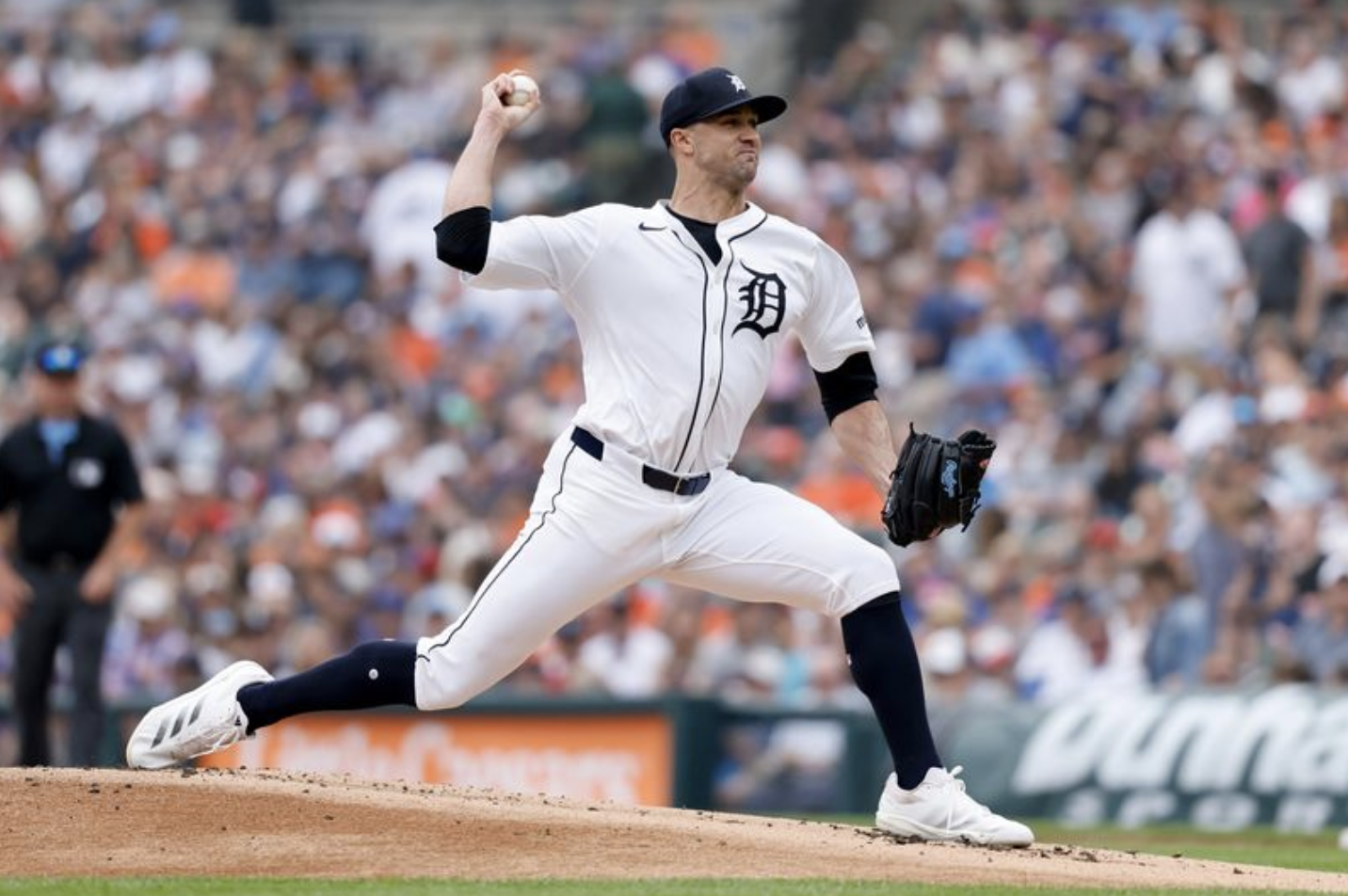
RHP Jack Flaherty is one of the very few successes POBO Scott Harris has had in free agency Via USA Today on 6/8/2025
Harris continued to sell off productive veterans like OF/1B Mark Canha, RP Andrew Chafin, and late-bloomer catcher Carson Kelly. None of the five prospects acquired are ranked in the top 15 or they’re out of the organization. It’s easy to play the “hindsight being 20/20” game, but even in the moment, these were all underwhelming returns for a solid, late game bullpen reliever, an above average catcher, and a solid veteran bench bat.
The 2025 trade deadline was a masterclass in horror story GM-ing. The Tigers needed help in the rotation and the bullpen but Harris deemed the prices for star relievers “too high” (none fetched more than a top ten prospect in the org). Harris acquired washed-up SP Charlie Morton (5.42 ERA for Baltimore), SP Chris Paddack (4.95 ERA for Minnesota), and SP Randy Dobnak (pitched in 15 total innings after the 2021 season), as well as three RPs, none of which had an ERA under 4.50 (Rafael Montero, Kyle Finnegan, Paul Sewald, and Codi Heuer). Of the SEVEN pitchers Harris acquired, only one pitcher recorded an out for the team in the post-season. Most of them were DFA’d before the season ended.
Acquisitions
My buddies and I have an inside joke about Harris, that he has a propensity to sign AAAA RP and that he’s acquired at least two dozen of these types of pitchers during the past few years. None have amounted to any sustained success, besides Tyler Holton, who has remained a solid RP after his great first year with the Tigers.
The deepest organizational position is 2B. The depth is so strong that they have experimented with Colt Keith, Jace Jung, and Hao-Yu Lee at the hot corner, even though scouts rate them all as below-average defenders at 2B. Despite this depth, and Harris as quoted that he doesn’t want to block any prospects, he signed former Yankees 2B Gleyber Torres in 2025 and brought him back in 2026. Despite well below-average defense, Torres has produced 4.8 bWAR in 188 games with Detroit.
Prior to the 2025 season, he signed oft-injured SP Alex Cobb for 1 yr/15 million. He did not pitch for the team during the year due to injury.
Needing SP desperately for the 2026 season, he signed cantankerous FA SP Framber Valdez to a lucrative three-year deal. While Valdez has had a successful career, his stats have been in decline for the past couple years, and this year, he has the worst ERA of the cobbled together starting rotation. Then, in a moment of good will and team need, they brought back future HOF SP Justin Verlander, which was seen as a solid signing. Unfortunately, Verlander has made one start this year due to injuries. Additionally, he signed declining future HOF CL Kenley Jansen. Jansen has a -0.2 bWAR and a 5.31 ERA.
Draft Selections
The thesis of this article is to highlight Harris’ lack of impactful big league moves, yet this article would be missing a key ingredient if it didn’t mention Harris’ drafts. He has produced fairly successful draft classes during his tenure, which have not had the chance to bear much fruit as of yet. His first draft (2023) had him pick high school CF Max Clark with the third overall pick and 2026 All-Star (potential ROTY) INF Kevin McGonigle with the CBA pick (37th overall). Both players are highly regarded and have fared well in their professional careers, thus far. Second round pick 2B Max Anderson is acclimating to AAA after hitting very well in the AFL last fall. Seventh round SS John Peck and fifth round SP Jaden Hamm are viewed as potential major leaguers.
The 2024 class is still young. First round high school SS Bryce Rainer had a successful start to his career before a shoulder injury ended his 2025 season very early. Rainer has slid a little on several prospect lists this year as he has struggled to readjust to professional pitching. Second round pitcher Owen Hall has produced some excitement within the organization but isn’t on any major prospect list. Many would say it’s way too early to judge the 2026 class, Harris has two players (first round SS Jordan Yost and third round pitcher Ben Jacobs) who are ranked better than 400 on prospect lists (Yost #288 and Jacobs #322). Time will tell if these prospects pan out and which prospects surprise and are late risers.
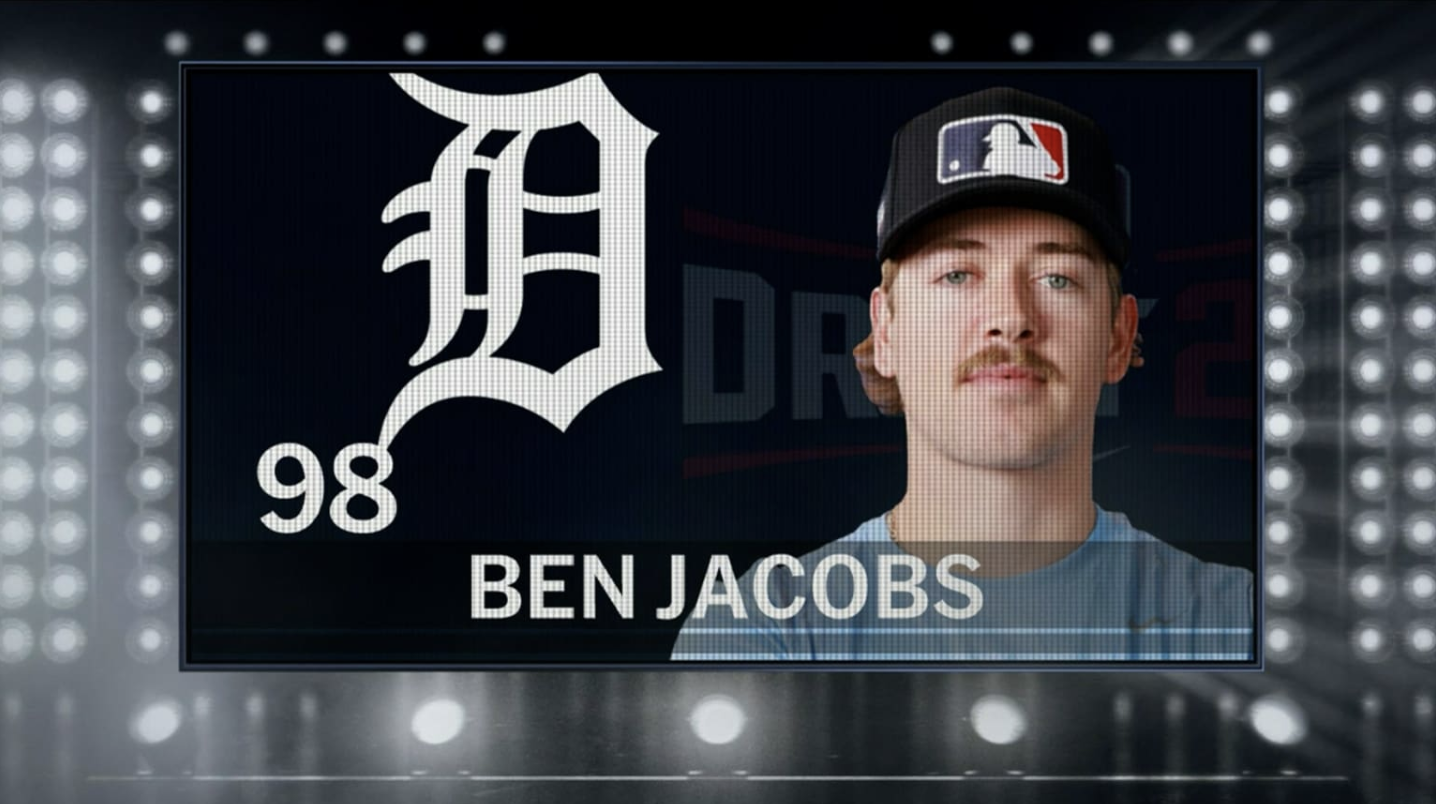
Rising prospect from the 2025 MLB draft, LHP Ben Jacobs from Arizona State University (3rd round) Via MLB.com
One Caveat
Former Tigers owner, Mike Ilitch, operated the team like a major market. The owner of the Little Caesars franchise, Ilitch was beloved in the city, as he spent money and appeared to really care about the team and the city. He even (quietly) paid for the residence of Rosa Parks up until she died.
When the pizza magnate died, his son, Chris, assumed control of the franchise. Chris Ilitch has operated much more frugally than his father. The big swings on contracts like Báez, Valdez, and (to some extent) Flaherty, are made to have felt like the purse strings have tightened a bit. Detroit still remains in the top half of the sport in budget, but that’s a bit easier when the sport has 5-9 teams that actively avoid handing out big FA contracts (Cleveland, Tampa Bay, Pittsburgh, Oakland, etc).
Conclusion
Harris took over a team needing an influx of talent throughout the system, top to bottom. He’s led the charge with rebuilding the farm into a top 5 system. And despite two playoff appearances, the team has simultaneously overachieved and underachieved. The 2024 and 2025 seasons saw the team exceed expectations, led by revered manager AJ Hinch and magic working pitching coach Chris Fetter. As we know, 2026 has been drastically disappointing for a team that has the potential of a World Series contending team.
Michael L. Sküpin is a grizzled millennial husband/dad who loves talking baseball, football, hockey, basketball, college sports, sports business, fantasy sports, and most other sports. Fandoms include Detroit, Philly, & Indy. Also happy to chat about advocacy, mental health, social justice, and peace.