
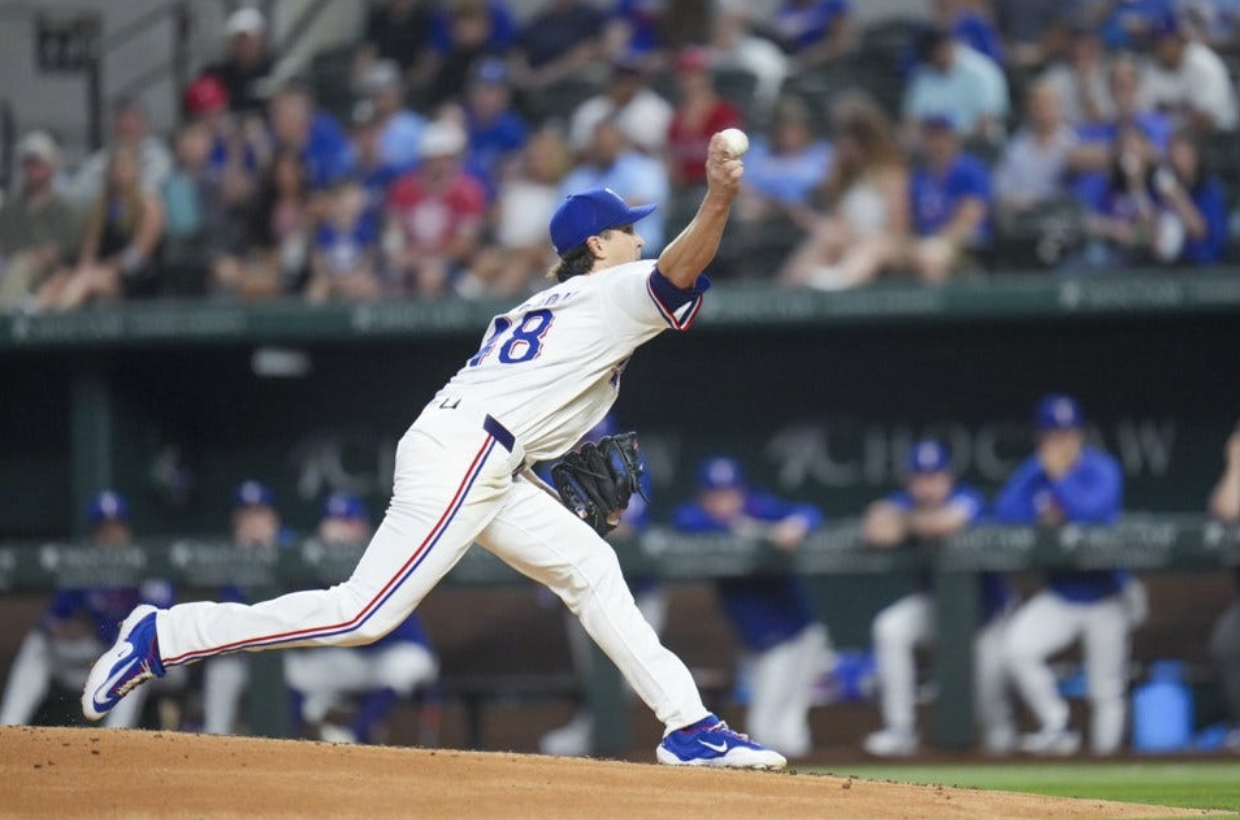
Photo by Julio Cortez for the AP
Pitchers get hurt. It’s the picture of MLB right now. We now fully expect Tommy John surgery for the new, young pitcher for our favorite club. Sometimes we even find ourselves reading prospect reports and thinking “thank goodness they already had TJ.” For decades now, the chase for the greatest velocity, spin, and “stuff” has spearheaded the injury increases among professional and college pitchers.
Here’s a shortlist of some of the league’s best pitchers who were injured this year:
Tarik Skubal, Spencer Strider, Josh Hader, Hunter Greene, Edwin Diaz, Ben Joyce, Jacob DeGrom, Garrett Crochet, Cole Ragans, and that’s nowhere near the end of the list.
Pitching injuries have skyrocketed during the Spring Training ramp-up, with high school pitchers making up a greater percentage of elbow injuries than ever before. The length and number of IL placements among pitchers has increased gradually since at least 2005, as published by MLB in 2024.
Even Major League Baseball is showing some level of concern for the increasing number of pitcher injuries. That’s significant given the historic corporate apathy concerning pitchers getting hurt. Sandy Koufax, John Smoltz, Nolan Ryan, and many others were (generally) pictures of both health, effectiveness, and recovery.
But that’s a survivorship bias. You have never heard about the hundreds of pitchers who flamed out in the minor leagues because their elbows blew out and Dr. Frank Jobe’s revolutionary surgery wasn’t common yet, with Koufax being the biggest case. Historically, MLB had little care for pitchers being injured, mostly due to a lack of knowledge about the danger.
Special: Pitchers are Athletes(?)
This was the oldest paper I could find about UCL-specific issues, published in 1993. Such research was conducted well after the end of careers like that of Kazuhisa Inao, a right-handed Japanese pitcher who totaled 404 innings in a single season and suffered an “unresolvable” arm injury in 1963. He was one of many who saw the end of their baseball careers because of ignorance concerning the ulnar collateral ligament and the extreme valgus stretch of the delivery.
Baseball hasn’t done much to fix pitcher injuries since the invention of Tommy John. More advanced maneuvers such as the Internal Brace and NanoNeedle have accelerated recoveries, but nothing has really stopped pitchers from getting hurt.
I’m not a doctor, but it’s important to qualify one basic fact of exactly why pitchers get hurt.
Placing too much torque on the elbow, shoulder, or both are the cause of injury. That sounds obvious, but many are quick to place the blame on velocity, plyometrics, or other training techniques. At the end of the day, whatever the source of such activity, pushing past the limits of the human arm result in medical issues.
Pitchers who make it to the MLB are another survivorship bias. Those who throw the hardest, most frequently, and most effectively are those who put the most strain on their body to do so. Literally zero of the top 10 pitchers selected in this year’s draft throw slower than 90 mph. Pitching at the highest level requires physical strain of the highest level, whether we like it or not
There isn’t any way to encourage aspiring big-leaguers to throw slower. This is an economics issue. Velocity, spin, and elite pitch quality generate more success at every level of baseball, as it should. It coincides that those characteristics are usually correlated with higher stress on the elbow, and therefore more injury. The pitcher willing to risk that injury for another couple ticks of heat on the fastball is going to go further than the one who won’t. The end.
So let’s try and fix it.
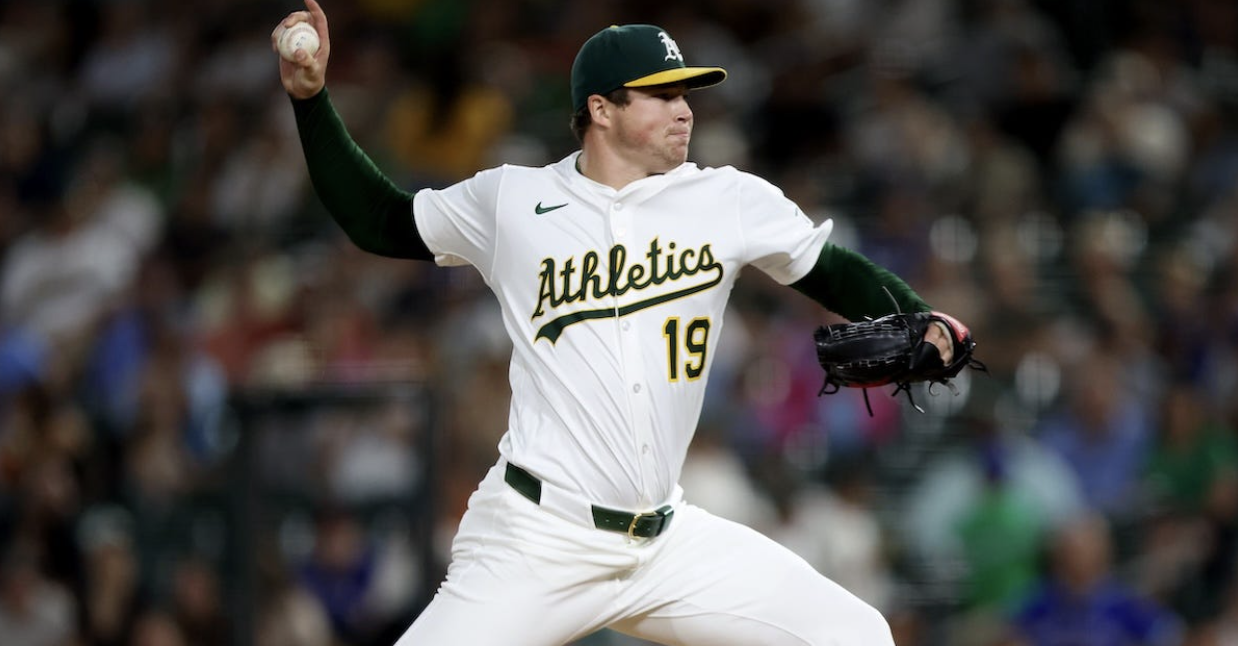
Photo by Paul Kitagaki Jr.
Again, stopping Aroldis Chapman from throwing 100 mph isn’t happening. Neither is encouraging Trevor Megill to throw his curveball a little softer. Max velocity is more than the way to get strikeouts, seeing triple digits or a 90 mph curveball is a visual spectacle for baseball fans everywhere. But what can we do?
Option I: League-Wide Off-Days.
Already proposed by the owners, the whole league forgoing a day of baseball every week during the regular season is an interesting idea. The NPB has a league-wide off-day already, and this study noted that NPB arms in their minor leagues got injured 3.7x less often than American arms. It also noted that the U.S.-based pitchers were often heavier, taller, and put more torque on their elbows than Japaneses arms regardless of the off day. There’s no real evidence substantiating that the off-day directly reduces pitcher injuries. Throwing slower in the NPB and more conservative training strategies results in the lower injury rate.
The idea could work though. Those off-days prevent extreme stretches of games like the Red Sox 16-in-16 streak this past season.
On the surface, bullpen arms could get more consistent rest and avoid pitching three days in a row or 3/4 games in a series. Starters could also afford to have an extra day’s rest which would increase the space between a start, a bullpen practice, and another start. Or it could encourage teams to use the bullpen more liberally in expectation of the off day.
Say every team gets Monday off like in the NPB and it’s an important Sunday series for your favorite club. Maybe the off-day actually encourages a manager to go to a fatigued high-leverage arm as needed because they know that reliever can recover on the following day, but that’s just speculation.
The day off would be undeniably good for starters though. It would keep young pitchers off of ‘regular rest’ (4 days between starts), which multiple MLB starters have said is an exhausting schedule to maintain. Matt Cain famously said that 4-days rest isn’t really rest given the days between starts are so full of lifting, conditioning, and throwing regardless. The Marlins even tested using starters out of the bullpen toward the end of the season, skipping the between-start practice session most starters throw anyways. Sandy Alcantara even racked up a few saves. The Braves let Chris Sale pitch out of the bullpen to end the Phillies’ October (which was legendary, by the way).
Maybe a league-wide off-day encourages spreading out the innings more evenly as the line between starter and reliever continues to blur.
Option II: Just add more roster spots ¯\_(ツ)_/¯
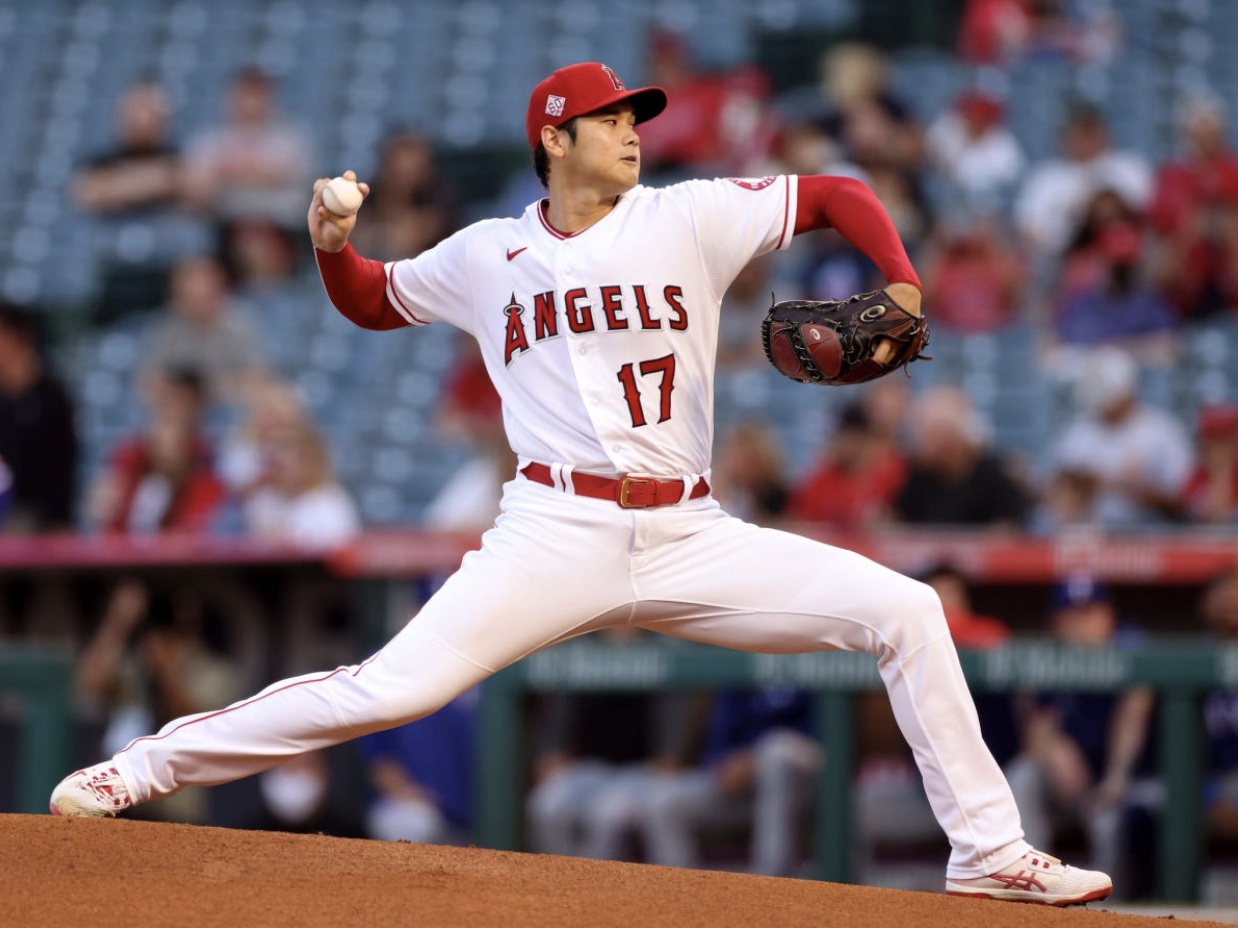
Photo by Harry How
Shohei Ohtani effectively gave the Dodgers an extra roster spot given his two-way-ness. He doesn’t count toward the Dodgers’ pitcher limit given he is also a hitter. The Dodgers routinely run a 6-man rotation to give their starters extra rest with zero backlash.
Usually, teams avoid running a 6-man rotation because an extra starter prevents having an extra bullpen arm. One extra-innings showdown can leave your favorite club with 2 relievers the next day during difficult stretches.
So, why not let every team do the Dodgers thing? Add two roster spots, and require that six of the active fifteen are counted as starting pitchers, and teams have more optionality with roster.
But how would this actually prevent injury? It could only do so via proxy. Having extra roster spots could encourage managers to chase after more games when a starter posts a poor line. Say your guy goes 3.0 innings and gives up 3 runs to make the game 1-3.
With an extra reliever, managers wouldn’t just leave a pitcher in because they have to eat innings and throw the game away. Rather, you could prevent the poor starter from throwing another needless 40 high-effort pitches and go to a more rested reliever.
This would spread out the innings, certainly, but the greatest pitchers will still accumulate the most innings (and elbow strain) because they are the most effective. One pitcher had elbow surgery in early May, but still accumulated 73.0 total innings for a contender.
That was Tarik Skubal. Had he been a 4.70 ERA reliever, would Dave Roberts let him maintain a large workload shortly after going under the knife?
So what’s another solution?
Option III: What if we incentivize throwing slower?
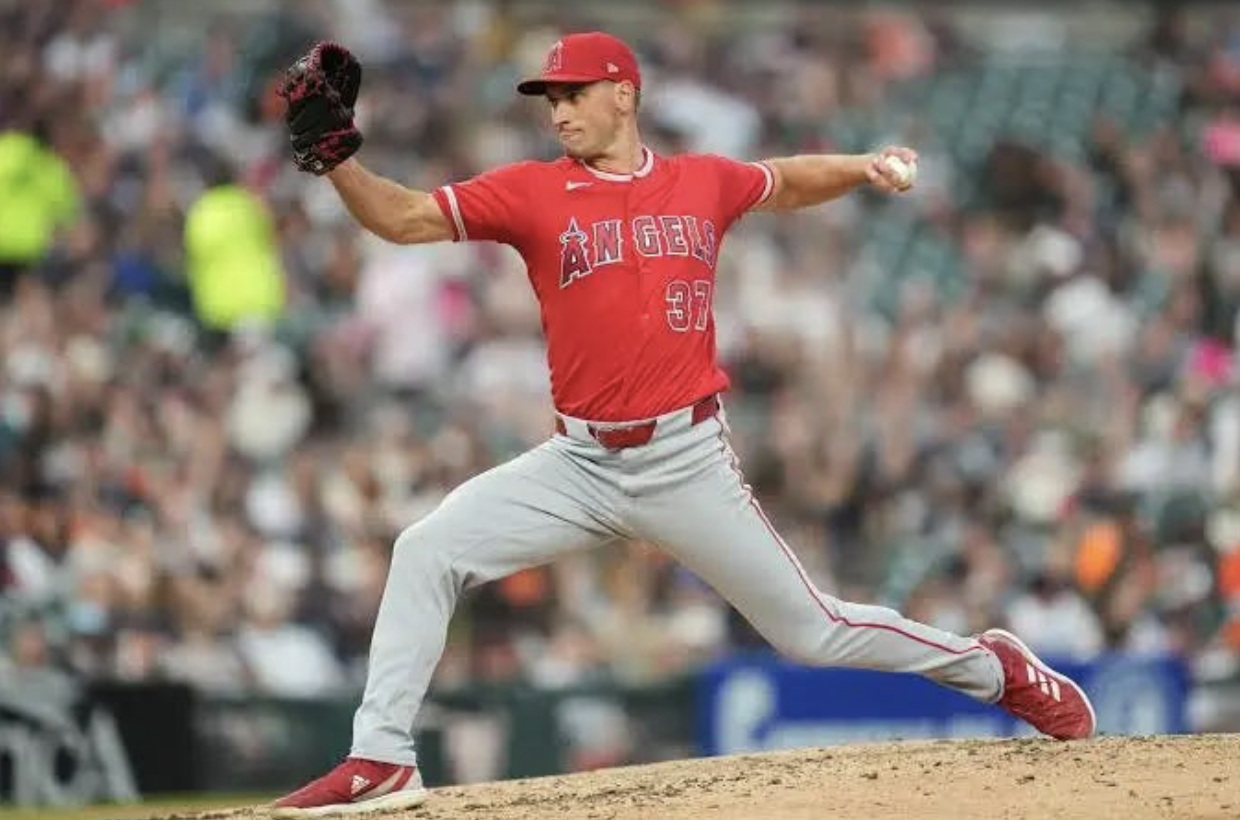
Photo by Olivia Vanni
37-year-old Brent Suter has the slowest fastball in MLB at 87.5 mph. He also has one of the highest ground ball rates in the league and a career 3.54 ERA. A good reliever without the velo. It’s not like pitchers can’t get outs at the MLB level without 100 mph. It can be done. Encouraging a softer-tossing profile is pretty difficult on the surface, but I have an idea.
Picture this:
“Pitchers on the 60-day IL for arm-based, non-contact injury cannot be taken off the 40-man roster.”
Now, Tommy John is seriously bad for your favorite team. Say your team’s new flamethrowing ace goes down with Tommy John. You can’t bring up a young, Triple-A starter to replace the innings without optioning another active player down in this scenario.
The “non-contact” note also prevents teams from paying in WAR for a freak incident like a comebacker line drive that hits a pitcher. A “freak injury” protection, if you will.
This option is by far the most radical, and would be the most sweeping change since the pitch clock. We can use the survivorship principle from earlier to prevent arm injuries the same way intense training creates them.
Teams have to cover innings, and they’d prefer not to option their young arms so much that they’d be placed on waivers. Pitchers getting hurt frequently would make roster construction extremely difficult and require more shuffling between the majors and minors just to get through the season. If five pitchers are down for Tommy John, the team-wide ERA will balloon. Teams would begin to favor higher floor pitching that could reliably cover innings without being injured over volatile arms. This would have your club’s 4th starter probably a sinker/changeup deception artist instead of a 95 mph four-seam slider guy that overpowers when runners get on base. That profile, theoretically, is more likely to be injured given the higher velocity and more frequent elbow strain.
We can’t get rid of Tommy John surgery. It will remain common in the high school and college levels as young pitchers chase their dreams. We can, however, change the incentives given to the league’s best pitchers. The increased availability is favored over maximum strikeout upside, the better quality of life for a given pitchers’ elbow. But for now, and likely the future, rising elbow and shoulder injuries are unfortunately here to stay.
About the Author:
This piece was produced for Painting Corners by Ransom Fassett. You can find more of his work here.