
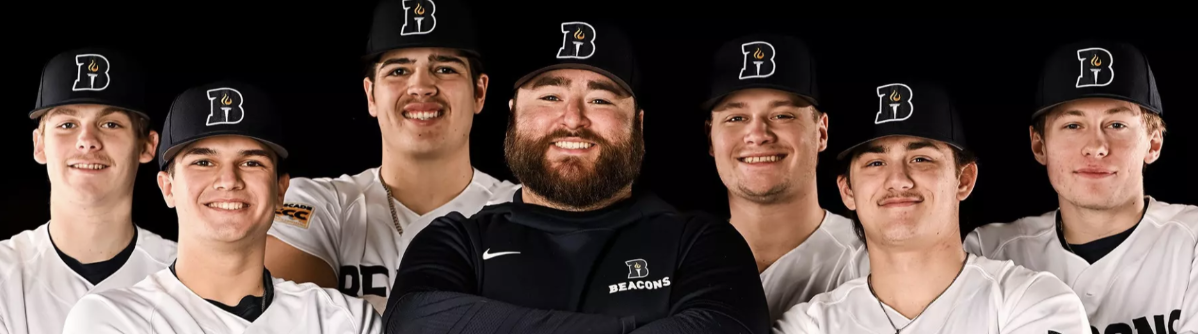
Jamie Womack and the Bushnell Beacons
Jamie Womack, head coach of the Bushnell Beacons. From cheering for the Atlanta Braves to playing the game at the collegiate level, he has taken his experience and knowledge from the field to the dugout. Through his experiences in recruiting and managing, Jamie is shaping the next generation of young men on and off the field, leading with desire, focus and energy. Jamie has taken time out of his busy schedule to answer some questions on his work in the world of college baseball.
Q1: What made you fall in love with baseball as a kid? Has this changed or evolved being a part of the game?
A1: I think what initially made me fall in love with baseball was the shared moments with my dad growing up. I was a huge Braves fan and watched them on TBS everyday. Chipper Jones was my favorite player growing up. The relationships the game has brought into my life are still what keep my love for baseball alive.
Q2: What is your favorite memory from playing? Did you play against or with any big league players?
A2:My favorite memory took place in my junior year of college. Historically, our team had struggled and then we got a new coach (Jake McKinley, field manager for the Mariners now). We had the biggest turnaround in college baseball history and we were able to dogpile on our home field after clinching the regular-season conference championship. I didn't play with any big leaguers, but I did play against Logan Webb in Little League All-Stars. When I was employed as the visiting clubhouse manager for the Eugene Emeralds, who are an affiliate for the Chicago Cubs, I got to work with big league players like Dylan Cease, Bryan Reynolds, Eloy Jimenez, Blaze Alexander, Ryne Nelson, Brandon Pfaadt, Slade Cecconi and many others.
Q3: Do you believe in superstitions? If so, do you have any yourself?
A3: Yes I do! I had several as a player, but as a coach, I always listen to the same song pulling into the parking lot on game days, park in the same spot, and I have the same pre-game process every day.
Q4: How do you stay level headed during a game? During a rough stretch in the season?
A4:The biggest thing for me is staying focused on what we’re trying to do. We’re trying to build young men with baseball as the tool. Losing my cool or losing sight of what’s really important takes away from that and takes us further away from being able to win baseball games. I’m not perfect, I definitely have my moments, but we do the best we can.
Q5: Being from Eugene, how special was it to come home and coach your hometown collegiate team?
A5: It was really special. I consider myself to be from two places, Northern California and Eugene. I was able to go home and play college ball where I grew up and then I got to come back to Eugene in a professional capacity. It’s been a lot of fun being able to experience this with people who’ve been a part of my journey at different stages. There have been local players who’ve been Beacons, and it has been great seeing them grow from when they were much younger to where they are now. My two youngest brothers play for us as well, and that is priceless.
Q6: Coming to a brand new program, was there one or two things that excited you? Were you hesitant or nervous about anything?
A6: Being a part of this program since the beginning has been truly special. I am forever grateful for Tommy Richards (now Asst. at Washington State), the program's first head coach, for allowing me to be a part of it. This has been unique for me because I was part of the first-ever baseball team at Jessup University. Having experienced that as a player, I was able to remember what I felt during that time and use that perspective when I became a coach here. It gave me a good understanding of what was to come. The excitement was fully in being able to be a part of the first group. The first staff. Recruiting the first players. Being there for the first win and everything in between.
Q7: How did your experience as a recruiter shape the way you approach coaching? A7: My experience as a recruiter has really shown me how important relationships are. Those relationships don't end when a kid commits or doesn't commit. Several players who have come through here said no to us at one point. We’re in a relationship-driven business, and we always try to lead by taking care of the person first.
Q8: The Beacons are listed at 4th place in the pre-season rankings. Do you think this is a fair ranking?
A8: In my opinion, any pre-season ranking is a fair ranking. We’re in an extremely competitive conference that produces professional talent and nationally relevant teams year after year. Last year we finished fourth in the regular season and have had a lot of talent graduate from that team. I think an important lesson for our team is to never think too highly or too lowly of themselves. This ranking provides a good gut check for the team, showing we have something to prove along with the motivation that there’s something on the line for us every day when we step on the field.
Q9: What was it like to win the Cascade Collegiate Conference tournament in 2024?
A9: This is my favorite baseball memory ever. I could go on about that team forever, and there were so many special people involved. Being in our third year as a program and seeing our players accomplish that was special. That team was full of founding fathers, guys who took a chance on a program that hadn't existed before. They had endured two losing seasons but stayed consistent with the process and standards. The team included transfers who took a chance on us and freshmen who believed in something that hadn't happened yet. Three of those freshmen on that team are seniors now and have had amazing careers.
Q10: What is one thing you took away from the NAIA National Championship and brought to the team in recent years?
A10: I think the biggest thing taken away from that conference championship team is that it doesn’t have to be the most talented team and it doesn't have to be perfect all the time. It’s about a group of guys that genuinely love each other, would do anything for one another and refuse to fall short in desire, focus and energy. That culture, that commitment to one another, the standard set and held is what allowed them to win. So we’ve tried to bring that same focus to every group since. Every group is unique and different than the last, so we’ve evolved and our approaches have adjusted, but that is the core.
Q11: Looking at the 2027 schedule, is there a certain series you are looking forward to?
A11: The 2027 schedule is exciting. Every weekend in our conference is a dogfight, so every game deserves the same excitement. Fresno, CA, is hosting a tournament early in the season that we will be competing in, featuring programs from around the country. I am excited for our guys to be able to compete in that setting and see more of what they might run into on a national scale.
Q12: What are the biggest misconceptions players and parents have about the recruiting process?
A12: It’s a hard process, and I feel for the families that are going through it right now. With the introduction of NIL, the continued evolution of the transfer portal and the announcement of the 5-in-5 rule, the process has become more confusing. There are seniors who might come back, which was not an option before. This trickles into the portal, creating more entries than the year prior. NIL changes stuff at the top and then trickles down to the rest of us. In my opinion, smaller four-year programs are being treated as junior colleges at times. We’ve had players move on to D1 from our school.
Q13: If you had 30 seconds to evaluate a player at a showcase, what would you be looking for?
A13: 30 seconds would be pretty difficult. In that time frame I’d be looking for athletic movements, size, projection of size and if there’s any interactions, see how they treat people.
Q14: Has there ever been a player you recruited who taught you something about evaluating talent that changed how you recruit today?
A14: 100%. I've been swayed by talent before and overlooked some potential character red flags. Being wrong a couple of times early in my career changed my evaluation process. Talent means nothing if the character and personal fit aren't right. It's pretty easy to notice talent, but the makeup evaluation process needs to take longer.
Q15: Have you ever passed on a player because of something you saw away from the field, rather than their actual baseball ability?
A15: Yes, we've passed on a ton of players for things they've done off the field, whether it was how they talked to their parents, their social media or other behaviour we've discovered during the evaluation process. Our team here at Bushnell is one big family, and when we consider adding someone to it, we don't need a player who we have to protect our family from. It is imperative that anyone we add to our family is going to honor it and protect it.
Q16: What do you wish more high school players understood about what they're actually committing to when they accept a college baseball opportunity?
A16: Something we’ve noticed is that it’s taking longer at times to get players adjusted to the autonomy needed. Mom and dad aren’t there to check in on you anymore. Everything is up to you now. There are standards that need to be met when you commit to a team and it is a lot more than just “hey I’m going to play baseball here.” It’s a lot of work to be a collegiate athlete and you have to manage time differently than ever before. There’s a work output expectation and when you don’t meet it there’s a roster full of guys ready to let you know that. It can be a tough adjustment for guys who aren’t prepared.
Q17: Are we sometimes doing young players a disservice by prioritising winning at the youth and high school levels over actual player development?
A17: To an extent, yes. I think the desire to win and compete is incredibly important. However, there’s a lot of teaching we’re doing on simple things that younger players seem not to have heard or been taught yet. That’s our job, but it has been noticeable. The general feel has become harder to find as so much of it is a showcase ball past. We’ve honestly found a lot of success with guys who have come from a Legion background rather than travel ball.
Q18: What do Canadian players often get wrong about the American recruiting process?
A18: I don’t know that I’ve experienced anything with Canadian players that they have gotten wrong about the American recruiting process. Our program has had three Canadian players come through. Two of them started at the D1 level so they got read in pretty early. Our third player came out of high school and played for a very good club organization that prepared him well for what to expect. If anything it might be with how the money works out with the exchange rate and all of that.
Q19: How do you think showcases, travel teams, and recruiting camps have changed youth baseball, and what’s one change you’d make to put development back at the center?
A19: Of our 2027 commits, four competed in our annual Labor Day prospects camp held each September, where they received offers directly out of camp. We also attend a few other big showcases, The Hawaii Sandlot Classic, and the Baseball Northwest Championships, which I think are both awesome. These organizations do a great job of focusing on the player and putting them in situations where they’re being educated about the process, the schools coming to watch and what they might expect moving forward. On the other hand, travel teams in my experience have been hit and miss. We’ve got a couple that do a great job near us, but like I mentioned earlier, in some cases we’ve noticed kids coming from that world to be far less prepared for the collegiate experience than others. It is hard to lump them all into one boat and say there’s something I’d change about them because there are several players we’ve recruited directly from and found success with.
Q20: What do you consider harder; recruiting talented players or finding players who fit the culture you are trying to create?
A20: Finding culture fits is definitely harder than finding talented players. There’s so much talent right now, but determining whether they’re ready for college baseball and whether they're right fit for our culture is a much longer and more difficult process.
The Bushnell Beacons compete in the Cascade Collegiate Conference and their 2027 baseball season starts on February 5th with an away series against Simpson University (Calif.). You can follow their pursuit of a berth in the Cascade Collegiate Conference Tournament through their social media accounts, Bushnell Baseball Instagram and Bushnell Baseball X. Thank you, Jamie, for taking the time to answer my questions, and I wish you and your program success in the 2027 season!
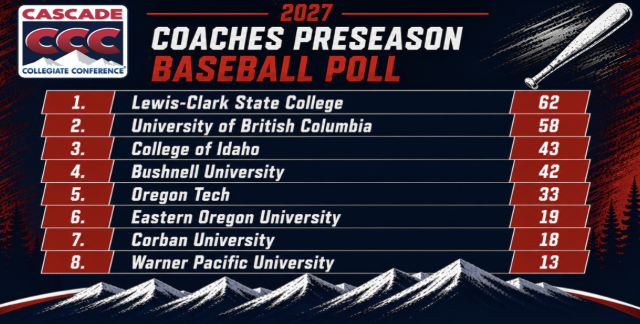
Preseason Poll