
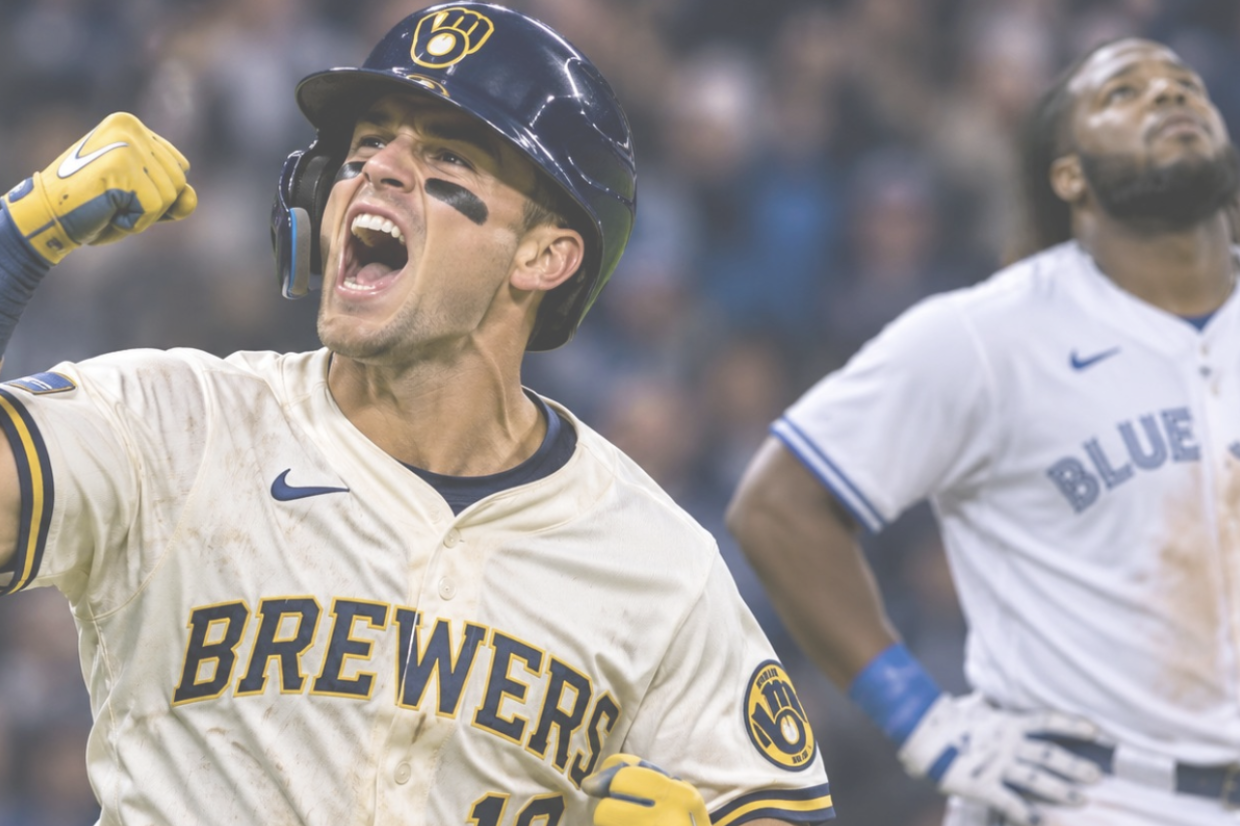
The Brewers and Blue Jays: a tale of two approaches
Major League Baseball has seen an undeniable shift recently, in terms of power dynamics and organizations that have completely altered their pathway to success. This includes the Milwaukee Brewers' dominant 2026 season, which culminated in a four-games-to-one World Series victory over the Tampa Bay Rays. Despite payrolls that ranked 19th and 28th, respectively, among MLB clubs, the Brewers and Rays were unequivocally the two best teams to meet in the Fall Classic. (2026 MLB payroll rankings)
The similarities between these two organizations were evident throughout the season. Both have invested heavily in their farm systems, accumulating top prospects who give them the flexibility to dangle attractive trade pieces at the deadline and pursue highly sought-after talent to solidify a playoff push. Milwaukee attempted to acquire Tarik Skubal, while Tampa Bay ultimately landed Freddy Peralta.
Does it make sense for the World Series champions to make another pitch for Skubal, a two-time Cy Young winner and quite possibly the best left-handed starter of his generation? Should the Rays, or for that matter, the Brewers, pursue a Peralta reunion to ensure he remains with the organization for the remainder of his career?
The answer in both cases is a resounding NO!
Some teams simply can't help themselves. It is commonly understood that, over the long run, systems prevail in professional sports. Sure, a team might be able to stack its roster with perennial All-Stars through free agency, but until there is a culture of brotherhood in that clubhouse, a genuine sense of everyone looking out for one another, the likelihood of winning it all and sustaining that success over several years is considerably less.
The Los Angeles Dodgers are truly stacked, with a payroll through the roof and deferred into what seems like the next century. Their success also stems from a combination of carefully selected free agents and a farm system that is filled with top prospects. (FanGraphs farm system rankings)
If a Dodger isn't performing, regardless of the name on the back of the jersey or the nine-figure contract he is earning in average annual value (AAV), he will sit. Top prospects like outfielder Josue De Paula or shortstop Emil Morales are eager and, arguably, already deserving of an opportunity to join the big club.
When Free Agency Works In MLB & When It Doesn't
Veterans like Mookie Betts and Kyle Tucker arrived in Los Angeles through a blockbuster trade, in Betts' case, and a massive, lengthy free-agent signing, in Tucker's. They understand that regardless of the resources invested in acquiring them, if they don't perform, a top prospect is pushing hard to take their place.
This type of pressure isn't toxic. It's exactly the kind of professional motivation that should exist in every successful organization.
Unfortunately, for many higher-spending teams, including the Mets, Yankees, Phillies and Blue Jays, that level of organizational accountability and organic pressure doesn't appear to exist, at least not now, or in the foreseeable future.
Nothing suggests that Trea Turner, who is under contract with Philadelphia through 2034, won't be the starting shortstop on Opening Day in 2027. Conversely, in the American League, Vladimir Guerrero Jr. has just completed the first season of his 14-year, $500 million megadeal.
2026 was far and away the worst season of both of these formerly perennial All-Star players' careers. Their respective farm systems, meanwhile, rank 21st for Philadelphia and 23rd for Toronto.
The scene from The Natural comes to mind, where Bump Bailey, played by the late Michael Madsen, repeatedly hollered at manager Pop Fisher, played by the late Wilford Brimley, "What Do You Want From Me?" Fisher finally responds, "I Want You To Sit Down!"
Watch the scene from "The Natural"
Theatrics aside, there doesn't appear to be any Roy Hobbs on the horizon to help elevate the rather stagnant play of these former superstars. Metaphorically speaking, Turner and Vladdy can continue playing like Bump Bailey, seemingly uninterrupted.
At the MLB level, there is also an integral component that some teams seem to inherently possess, while others simply don't. That is the ability to pick up teammates and look out for the guy beside you in all facets of the game, on and off the field.
Baseball is a team sport, but it can, and will, become extremely isolating when individuals enter a headspace where everything becomes about them. Money and fame can do that to just about anyone if there isn't a strong reminder and reinforcement of a team system and philosophy within the clubhouse, where players genuinely respect one another.
Managers & Veteran Players Reinforce Winning System
To take it a step further, a manager like Pat Murphy, or former Braves manager Brian Snitker, who appears to have passed that same philosophy down to current Atlanta manager Walt Weiss, understands that respect is rooted in something deeper. It is rooted in love.
If the players in a clubhouse love one another, much like a military unit or a uniquely talented cohort from a graduating class, for example, they are more likely to do everything possible to support one another.
When that level of clubhouse culture is combined with elite talent at every level of an organization, a team can compete, sustain success and build something that lasts for years, or even decades.
The best organizations don't simply collect the best players. They build an environment where everyone understands that the organization comes first.