
Let Grandpa Have a Turn
Photo by Gerald Herbert for the AP
Quick question. What would you guess the average fastball velocity is for a right-handed pitcher older than 35? For context, average 4-seam velocity this year is 94.8 mph.
Maybe 90-92 for the elderly arms on your favorite team’s rotation? Brent Suter has the slowest average velocity in the majors at 87.5 mph on average and he’s 36 years old. Steven Okert is 35 averaging 91.3 mph. Regardless of your numerical guess, the answer probably landed somewhere around “not fast.” Oh, how you are mistaken.
The average 4-seam velocity for our veterans lands at 93.9 mph for righties, higher than the current average for all LHPs, and the average for RHPs as recently as 2019.
That year, 4-seams thrown by pitchers older than 35 made up just 1.8% of all pitches thrown, and averaged 91.3 mph. Pitchers working to that age remains rare, but it has become more frequent with 2.7% of all pitches being thrown by players old enough to run for President.
But… why?
Older pitchers are throwing harder and beating biology for two main reasons, and I’ll start with the fun one.
The longevity of the careers of Justin Verlander, Max Scherzer, Clayton Kershaw, and others have emphasized that this is possible in the first place. Pitchers are not forced into retirement by injury (like Sandy Koufax) or a severe drop in pitch quality.
Alex Cobb pitched well for 13 seasons and retired at age 36 while following an ‘adapt or die’ approach to throwing. He was a better pitcher at 35 than at 25 due to his dedication to nutrition, weightlifting, and anything he could find to keep himself healthy and improving as he got older. His career, like that of many, flourished in the advent of heavy spin tracking and Trackman-based training. He ditched his 4-seam and changeup in favor of sinkers and splitters that only got better as his career continued. Starting in 2020 (his age 32 season), Cobb posted 90th (or better) percentile ground ball rates with his run-sink based mix. He took his arm slot from 46 degrees to 36 degrees to keep a consistent release. Cobb did everything he possibly could to lengthen his career and maintain his effectiveness.
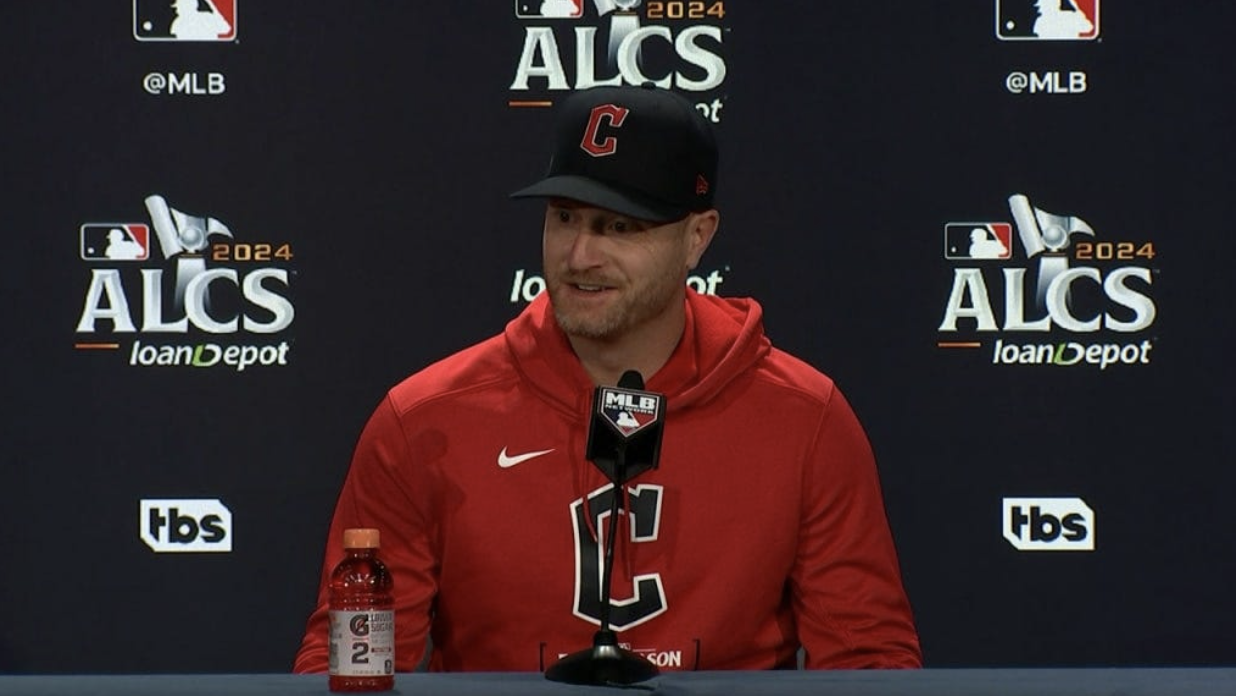
Broadcast freeze frame of Vogt naming Cobb the ALCS Game 1 starter
He embraced the Driveline approach (literally) when it first opened in 2012 in Kent, Washington, taking his velocity from 90.8 mph all the way to 94.8 in 2023. Modern camera tracking, force plates, and spin measurements have helped older pitchers understand exactly how their body is behaving as they age.
A perfect example of these changes are the many that Justin Verlander made as he worked to age-43 season. He noted that his body had become more upright and arched at release, which crept his release point higher. He favored a more deception-heavy and fluid approach by lowering the slot back into normal ranges. He found that he couldn’t pronate his wrist the same way he did in his early years with the Tigers, so he modified his relatively standard changeup into something more personalized that wasn’t so aggressive on the structures of his wrist. He tweaked his curveball and slider grips constantly throughout his career based on what was and wasn’t moving well.
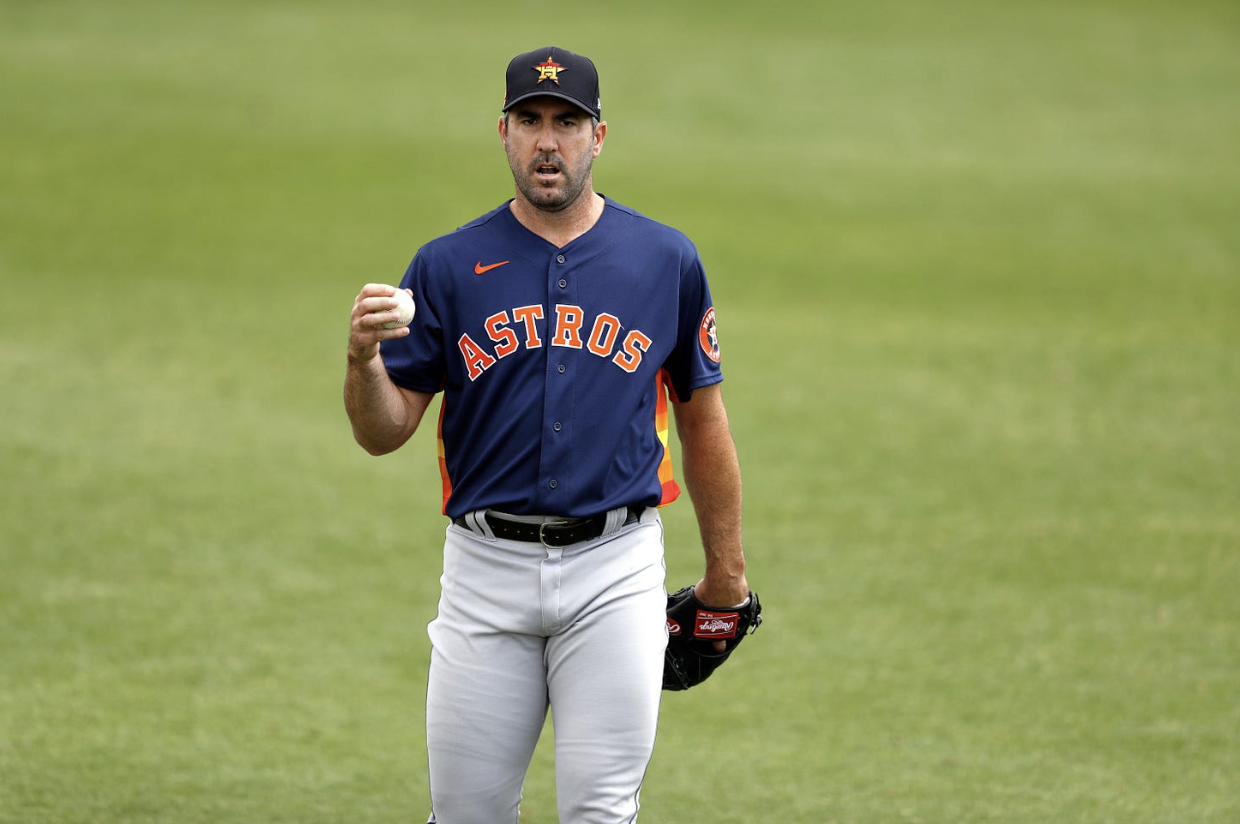
Photo by Gerald Herbert for the AP
The Athletic’s Jake Kaplan reported that Verlander would overhaul major components of his delivery while rehabbing from injury or during off-seasons.
Longevity for veteran pitchers has started with the widely available knowledge about what can and should be changed as they age. While a 34-year-old pitcher in 2000 may have been limited by ever-decreasing velocity and forced to retire, he could have been able to find that he was cutting the ball more frequently, for example.
The aging curve still exists, as Verlander pointed out. He felt that as he got into his 40s, he was fixing one mechanical issue after the other as changes shifted from tweaking simple flaws into complete overhauls into unsustainable physical changes that have resulted in frequent muscle strains. Verlander did seem to hit a bit of a medical wall this year, but he’s an excellent case study in just how far the best can go given that he wanted "to play until the wheels fall off."
Kevin Gausman’s fastball averaged 95.3 mph in 2016, but has plateaued at roughly 94.0 this year. That’s not slow by any means, but it is slower. Aroldis Chapman’s heater is sitting at a 96.9 mph average, a far cry from his 2017 average of 100.0 mph. Robert Suarez enjoyed a 99.1 mph average in 2025 when he led the NL in saves, but struggles with forearm issues and an average 98.8. I’m not quick to call out a 0.3 mph difference, but injuries also categorize how well a pitcher is aging into the golden years of their career.
In today’s analytic-heavy training space, aging pitchers are making unprecedented changes to how they throw, all in favor of maintaining effectiveness. Any veteran arm can raise or lower their arm slot in an offseason, shift a pitch grip, or rebuild a part of their kinetic chain to deliver the ball well. For older pitchers, it’s not as simple as their early 20s, where max effort velocity is demanded to make it to the majors. Unlocking that amount of physical “wiggle room” after already entering free agency is very difficult.
The Boring Part

Cameras catch Shohei Ohtani sleeping during an 18-2 blowout loss
Longer pitching careers can be explained in the same way as the rarity of LHPs who throw hard. Because there are literally less left-handed people, finding an Aroldis Chapman or Tarik Skubal is nine times as difficult as a righty version.
Lefties also don’t always throw as hard. I said earlier that for pitchers older than 35, the average was about that of a LHP. Lefties who don’t throw as hard as their right-handed counterparts can survive the extreme selectivity needed to get to the majors better because being left-handed is an outlier trait.
In just the same way, pitchers who stay in the league through their late 30s are usually very effective. For pitchers above 35, the top 10 ‘workhorses’ (ie. most pitches thrown) have six top-5 Cy Young Finishers. Good old survivorship bias. The list includes Kevin Gausman, Sonny Gray, Nathan Eovaldi, Chris Sale, and Merril Kelly. You could beat the Dodgers with that (maybe). Most pitchers who can’t make it to 35 in the league are simply pushed out sooner, so the oldest pitchers are often those at the very top, who find it easier to make these changes.
This list also includes relievers with outlier stuff profiles that help them to lengthen their (or jumpstart) career. It includes Huascar Brazobán, Tyler Rogers, Fernando Cruz, and others. This is not an exhaustive count. I didn’t even mention Chapman, Kimbrel, Iglesias, Wheeler, Rea, Hill, and others.
At the end of the day, to even remain in the majors at this age proves you still have something to give, be that in the form of a monster cutter like Kenley Jansen or a Hall-of-Fame pedigree like that of Chris Sale.
About the Author: Ransom Fassett is a sabermetrics writer for Painting Corners, you can find more of his analysis here